Robert Anton Wilson and Robert Shea. Blog, Internet resources, online reading groups, articles and interviews, Illuminatus! info.

Showing posts with label Natural Law Or Don’t Put A Rubber On Your Willy And Other Writings From A Natural Outlaw. Show all posts

Sunday, April 19, 2026

Mark Frauenfelder on 'Natural Law'


Mark Frauenfelder's Book Freak newsletter has a new piece out on Robert Anton Wilson's Natural Law essay:

"Shortly after I bought it, my wife Carla and I heard that Wilson and Timothy Leary were doing a joint book signing somewhere in Los Angeles. We gathered up as many Leary and Wilson books as we had — which was a lot — and headed over. When I handed Wilson the Loompanics edition of Natural Law, he looked up at me and said, “Where the hell did you get this?“ He seemed genuinely surprised that anyone would own it.

"Here was the author, astonished that a reader had found his own book. It confirmed what I already suspected: Natural Law is a deep cut, even by Wilson’s standards. That’s why it’s the first book for our new Deep Cut Edition — subscriber-only posts about books that are obscure, strange, or underrated enough to deserve special attention."

I subscribed so I could read the whole thing, though you could read the first part for free. 

Monday, February 27, 2023

Natural Law online reading group, Week 14, more on 'I Opening'


Chad Nelson's post last week on "I Opening," the last piece in the Hilaritas Natural Law, was so good it might seem there isn't more to say. But I can't resist putting in my bit.

The publication date of 1972 (in Gallery magazine) is interesting, as it shows that Schroedinger's Cat was in the works for a number of years; as Eric Wagner notes in the comments for last week's post, the copyrights for the first Cat book is 1979, and then they are 1981 for the next two. And it's interesting to me that the story was written during or just after Illuminatus! was written, and employs the Illuminatus! prose cut up technique. Hugh Crane pops up sometimes as a pen name for Wilson in the "Playboy Forum," for example in this brief letter dating to 1970. , so it's a name that was used years before the Schroedinger's Cat trilogy. 

Knowing that the story was published in 1972, it was shocking to me to read, about Crane's death by gunshots, "in 1980, as he was coming out of his apartment for a morning walk in Central Park, and the wild-eyed young man stepped in front of him ..." (Page 227.) John Lennon was shot to death in 1980 outside of his apartment building, the Dakota; the murder took place very close to Central Park. 

I love this bit: "The great affirmation that 'All is joy,' in contrast to the Buddha's equally-true, equally-false, and now obsolete, 'All is sorrow' ... " (Page 228). "

I also liked this: "Eternity is another code word. I won't get any extension in time from these rites. What I get, and you're beginning to get, is a deepening. Not more minutes, but more fullness in each minute. That's eternity."

Chad's entry last week got more reader comments than most blog posts in the series have received. Oz Fritz wrote, "Brilliant way to end the book with this top notch essay on magick. Wilson gives away a lot here." Oz, can you spell out what some of what Wilson gives away? 

A couple of annotations: 

"many people wrote to him, telling him he was the greatest American since Robert DePugh ...." (Page 207).  I did not get the reference, so I looked it up. Robert DePugh (1923-2009), was an anti-Communist activist who founded a militant group called the Minutemen. no connection to the punk rock band. 

"You're gonna end up like Chaplin," (Page 212.) Despite his greatness, Charlie Chaplin's popularity in the U.S. dwindled to nothing after a series of sex and political scandals, see the Wikipedia article. 

" ... likely at any time to come to a worse cropper than Fatty Arbuckle." (Page 214). His career also was destroyed by a scandal, although apparently he was  not really guilty of anything. 

"a moderately renowned psychologist," (Page 219), Timothy Leary, I assume. 

This will likely be the last posting in the reading group, unless Chad or I (or anyone else) think of something else that ought to be said. Thank you to everyone who took part. 


Monday, February 20, 2023

Natural Law online reading group, Week 13, 'I Opening'


Photo by Sander Sammy at Unsplash.com

  [I really like the entire Hilaritas Natural Law book, hence this reading group, but I think Chad's discovery and reprinting of "I Opening" is a particularly amazing gift for RAW fans. When I decided to do the reading group, Chad Nelson, the book's editor, offered to do a guest post on "I Opening," and of course I agreed. Here it is. — The Management.] 

By Chad Nelson
Special guest blogger

It seemed appropriate to conclude the new edition of Natural Law with something unexpected. After all, that’s the general flavor of the book’s main essay and its companion pieces: weird, contrarian, surprisingly information-dense. 

RAW once described his work as an attempt to put LSD into the intellectual water supply. Patrons of RAWIllumination and other longtime Wilson fans have probably built up a tolerance though, so the ideas presented in this book, although profound, may no longer shock our consciences like they did when we originally encountered Wilson. I hope ending the new Natural Law volume with Wilson’s lesser-known 1972 essay "I Opening", represents a flashback of sorts. There were other reality-shattering essays that could have gone in its spot, but I liked ending it with this one for a lot of reasons.

I often wonder what the ultimate practitioner of Maybe Logic, guerrilla ontology, neurological relativism, anarchism, and “that jolly flavor of nihilism — Discordianism,” might look like, and how they’d navigate life. Surely there are countless varieties of such a person, and Hugh Crane is unmistakably one of them. RAW’s “Reichian Rebel” (as Crane is described in Gallery magazine's synopsis of the piece) seems to be a blend of a half dozen or more of the different esoteric traditions and intellectual outcasts that influenced Wilson. Some elements of "I Opening" even seem autobiographical.

Like all of us, Crane was the opposite of a static individual. He is multiple and malleable (he “seemed to be a verb,” as Wilson liked to quote Fuller). The story take us through Crane’s evolution as he experiments with deliberately induced brain change. Throughout, we witness Crane move through various phases: from atheist to “religious nut”, de Sadian “sex maniac” to devoted husband, heir apparent to Houdini to disgraced nightclub act, to name a few of them. Along the way, Wilson inserts Crane into all sorts of historical events, like a subversive Forest Gump. In Crane, Wilson gives us a character willing to evaluate almost every form of cultural conditioning and decide for himself whether to regard them or not. In doing so publicly, Hugh Crane is simultaneously the freest man and the most despised. 

Is this the destiny that awaits anyone as bold as Crane in real life? If so, is it a life worth living?

I really appreciated Bobby Campbell’s analysis of the Guns and Dope Party in his recent interview with Mike Gathers. In short, Bobby suggests the Guns and Dope Party is yet another of RAW’s efforts to get us to think for ourselves. It’s sort of the ultimate trickster maneuver: to present an idea so incisive, yet taboo, that Wilson followers are almost guaranteed to parrot it before giving it a second thought. Perhaps there’s an element of that teaching in "I Opening." One must figure out a proper balance between individuality and truth-seeking on the one hand, and coexistence on the other. As heroic as Hugh Crane is, pushing back against every societal norm is fraught with social peril. Contrary though it may be to the romantic brand of free-thinking we’ve learned from Wilson, there may actually be a time and place for falling in line and self-censorship. So what is the right balance between rebellion and conformity? It beats me. It is an interesting paradox many of us grapple with — you really can’t have one mode of being without the other.

Wilson may not have intended for "I Opening" to be as profound as I’m making it (although Crane’s story is later expanded in the Schrödinger’s Cat trilogy, which Wilson hints may be a “ shamanistic manual in the form of a novel”). Regardless, I think RAW’s fiction gives us a depth that’s not always available through his non-fiction. At the end of "I Opening," we come to learn that after Crane’s murder, his disciples (a “cult”) exhibit odd behavior: visiting Crane's murderer in prison, petitioning for his clemency, expressing tolerance for his ideas, and “answering questions with maybe” and he [Crane] was seeking / we are seeking”. Perhaps this is a metaphor for the middle ground we ought to seek as we go about our lives equipped with Wilson’s teachings. 

I first read the Hugh Crane material in Schrödinger’s Cat, which came early on in my RAW journey. At the time I read it, most of the references to other historical renegades and occult philosophies were lost on me. But as I continued to read Wilson’s other work, and those he was influenced by, I began to pick up on the meaning of those obscure references. For instance, it only recently occurred to me that much of Crane’s story parallels the real life adventures of Aleister Crowley. I was also initially unfamiliar with the concept of ego dissolution (described in Crane’s prison notes), a concept I now understand is an experience that binds so many ancient spiritual traditions — helping me understand the meaning behind the title "I Opening." I’m sure I’ll continue to find others, which is another reason I’m always fond of revisiting this story.


Monday, February 13, 2023

Natural Law reading group, Week 12, 'In Doubt We Trust'


A marble bust of Pyrrho, the skeptical philosopher (Creative Commons photo, source.)

In this essay, essentially another discussion of maybe logic, RAW explains why uncertainty and doubt should often be considered the default position.

I was interested in his discussion about the real difference between cults and religions, i.e., his contention that there aren't any: "There are two clear-cut and empirical lines between a 'cult' and a 'religion' [a] membership (voters) and [b] bank account, [b] being a function of [a]. If a group has enough members to influence elections, it will also have a large bank account, and these two factors will guarantee that the politicians, the cops and the corporate media will treat it with respect, as a 'religion'."

While I think Wilson is on to something, it seems to me that the passage of time also seems to be a factor; if a cult lasts for generations, it acquires respectability and becomes a religion. But I'm having trouble thinking of any other criticisms of Wilson's suggestion. I was going to argue that cults don't take it well when someone tries to leave, but Islam is a religion that is famously hard on apostates. 

Elsewhere in the piece, Wilson states that a batting average below .333 means that the hitter "missed more than two out of three times they swung." Did RAW really know so little about baseball? (A batting average is the number of hits divided by the number of at-bats; a batter with three hits in ten at bats has a .300 average. The number of times he or she swung and missed is irrelevant). 

"... if  our perceptions are somewhat uncertain, then all of our ideas, which are deductions or inferences from perception, must also remain somewhat uncertain." 

Given RAW's interest in skepticism, I am surprised that I cannot remember any of his writings mention Pyrrho, the Greek philosopher who founded a school of skeptical philosophy, Pyrrhonism.  According to the Wikipedia article, one of the sayings of Pyrrhonism is "Perhaps, it is possible, maybe." Can anyone contradict me and point to a passage where RAW mentions Pyrrho?'

The RAW Semantics blog has a piece about Pyrrhonism which says, "I don’t recall RAW referencing Pyrrho in his writings or talks (although he may well have done). But when searching for such references, I found this nice description (by Erik Davis) of RAW’s philosophical vision as 'a kind of psychedelicized Pyrrhonian skepticism'."

Pyrrho by the way traveled with Alexander the Great's army, which reached India, and supposedly was influenced by Indian philosophers. 


Monday, February 6, 2023

Natural Law reading group, Week 11, 'KBOO-FM Interview'


The offices of KBOO in Portland (Creative Commons photo, source).

Once again, I would like to thank Chad Nelson for finding such an interesting interview and including it in this book. 

A few notes:

Cliff Walker was apparently a longtime Portland radio figure until his retirement, but I could not find a useful biography to link to. KBOO is a Portland community radio station.

Total Recall and Jacob's Ladder, page 186. Total Recall was based on a classic Philip K. Dick short story, "We Can Remember It for You Wholesale."  I have not seen Jacob's Ladder; do y'all recommend it? 

"The general attitude of Taoism and Buddhism is that wherever you are in space-time, that's your reality." Page 190. There is a new book The Scythian Empire: Central Eurasia and the Birth of the Classical Age From Persia to China,” by Christopher I. Beckwith which claims that both Buddha and Lao-Tzu were both Scythians, and that in fact they have the same name. From the Jan. 20 review in the Wall Street Journal written by Maxwell Carter:

"Mr. Beckwith transcribes the foreign-born Laotzu’s full name, Lao-tan—“lao” was formerly pronounced like “k’ao”—into the Sanskrit Gautama. For Mr. Beckwith, the simultaneous appearance of these revolutionary figures and ideas was no coincidence. Rejecting the belief that ancient cultures were conceived locally, he proposes that the Scythians were the common denominator that 'produced the great shared cultural flowering known as the Classical Age'.”

"a beautiful lady in Berlin," page 196, Marlis Jermutus perhaps?  Rasa says that is possible, but he thinks it is most likely that passage refers to Suzanne Seiler, a woman RAW met at the Frankfurt book fair. "That's just a guess," Rasa says.

I like RAW's translation of "sex and drugs and rock and roll" to "Venus and Dionysius and Apollo," although for the sake of consistency, he should say "Aphrodite and Dionysius and Apollo." (Page 196.)


Monday, January 30, 2023

Natural Law reading group, Week Ten, 'The Semantics of 'Good' & 'Evil'


Bob Banner, who published and edited Critique when RAW's essay appeared there. (Facebook photo).

This essay, dense with ideas, contains much of Robert Anton Wilson's philosophy. When I read one passage, I thought about how a famous episode in classical music history illustrates some of Wilson's points,  so I'll focus on that.

On page 176, Wilson writes, "If I classify something as 'Good' or 'Evil' in the metaphysical sense, defined by some priesthood or Party Line, I do not 'take responsibility,' I become virtually a ventriloquist's dummy, through which the priests or ideologists speak or act, and I abdicate all possibility of learning more or revising my mistakes ... Humans do not generally behave like robots unless they have been indoctrinated with some metaphysical system like Christianity or its close relatives, Judaism or Islam, or its late heresies, Naziism or Communism."

I have a music blog devoted to Russian classical music, and so I have a hobby, not usually related closely to this blog, of reading up on 20th century Russian composers, including well known ones such as Dimitri Shostakovich and Sergei Prokofiev.

In 1936,  the young Shostakovich had a hit opera, The Lady MacBeth of Mtsensk District. It had relatively noisy, modernist music and was more sexually explicit than operas tend to be, but that didn't prevent Russian audiences from loving it and quite likely feeling pride in supporting a cutting-edge Soviet composer. 

Alas, an influential cultural critic named Joseph Stalin, whose taste in operas was more conservative, attended a performance, and a vicious denunciation appeared in the newspaper Pravda, which called the opera "muddle instead of music" and said that Shostakovich's artistic approach "may end very badly," an ominous statement in the 1930s Soviet Union. Suddenly, the opera official went from "Good" to "Bad." The production was soon banned, and Shostakovich's Fourth Symphony (my favorite of his 15, by the way) also was banned and was not performed for many years.

Pauline Fairclough's enjoyable Shostakovich biography, part of the "Critical Lives" series, records the robotic behavior of Soviet musicians attempting to follow the Party Line: "Overnight Shostakovich was transformed from the Soviet Union's most feted composer to someone whose name could hardly be mentioned without reference to his crimes against the art of music ... The entire Leningrad Composers' Union voted in favor of the Pravda editorial, with just one exception: The composer Vladimir Shchervachev, who abstained."

Pravda, by the way, means "truth," a telling example of the confidence of the Soviet Union's Communist Party to decide what was "Good" for everyone in that country. Another prominent Soviet newspaper was Izvestia, which means "the news." Hence the bitter Soviet joke that "There is no Pravda in Izvestia, nor any Izvestia in Pravda." 

Shostakovich, who had also written an oddball opera called The Nose, never wrote another opera. Prokofiev, apparently less attuned to Soviet reality, spent much of his career writing operas, many of which were not staged. 

A couple of footnotes:

Laurance Labadie (1898-1975) was well-known to anarchists and libertarians; the Wikipedia bio notes that Labadie was a contributor to "A Way Out," which RAW edited. 

I Googled Critique: A Journal of Conspiracies and Metaphysics, where this essay appeared. I could not find an article describing it, but apparently it was put out for many years and may still exist in some form. When RAW contributed to it, it was owned and edited by Bob Banner (not the late TV producer of the same name). The Critique Bob Banner is on Facebook. 

Monday, January 23, 2023

Natural Law reading group, Week Nine, 'Dreams Without End' interview


From the Space Studies Institute.

Before we get into discussion of this week's episode, I just wanted to thank Chad Nelson for preserving such an interesting interview in one of RAW's books.

Probably my favorite RAW interview is, so far as I know, not available on the internet; it's the interview of Wilson done by Scott  Apel and Apel's late friend, Kevin C. Briggs. Apel has reprinted it twice: In Science Fiction: An Oral History  (the Kindle is only $1) and in Beyond Chaos and Beyond. 

This interview, which features Safransky patiently asking Wilson to explain points which might be unclear, covers many topics, and I will only comment on some of them.

1. Wilson says, "You can't live comfortably in Ohio, for example, if you're not brainwashed into a Republican, agricultural, Protestant reality tunnel." This is more true now than it was in 1987, when Ohio was known as a "swing state." At this point, it has definitely trended Republican.

Wilson adds (a few sentences later), "People who are uncomfortable as white, Protestant, small-town chauvinists become uncomfortable when they feel the alien signals coming in from New York and Los Angeles and from all around the world." I suspect they feel uncomfortable partially because they feel a loss of status. In terms of the eight circuit model, I think they are threatened in the second circuit.

2. There is considerable discussion in the interview about getting solar power from space. (The Space Studies Institute web page has a section on solar power from space which includes book recommendations). Given that SpaceX had reduced the cost of going to space, and given that awareness of the need for green energy to cope with global warming seems pretty strong, it seems odd to me that solar power satellites doesn't get more discussion. 

3. At the end of the interview, Wilson talks about trying not to hold grudges and doing rituals of forgiveness every week, and Safransky alertly asks Wilson to explain rituals of forgiveness.

As I recently discussed, one of the virtues of the new RAW Memes book  is that it covers many of Wilson's ideas in succinct fashion. I could not find a quote that deals directly with forgiveness, but here is a related quote: "Since most humans are still controlled by fairly robotic reflexes, the bad energy of the past far outweighs the good, and the tendency of the wheel to to keep moving in the same terrible direction, violence breeding more violence, hatred breeding more hatred, war breeding more war. The only way to 'stop the wheel' is to stop it inside yourself, by giving up bad energy and concentrating on the positive. This is by no means easy, but once you understand what Gurdjieff called 'the horror of our situation,' you have no choice but to try, and to keep on trying." (A quote from Cosmic Trigger, on page 124 of RAW Memes.)

I thought Wilson had talked about forgiveness shortly before he died; I don't see it on the blog he did the last few weeks of his life. Am I misremembering, or not looking in the right place? 

A note in the interviewer: The interview is from a Chapel Hill, North Carolina, magazine called The Sun, which was founded in 1974 by Mr. Safransky. The magazine still exists, and Mr. Safransky is still listed as the "Editor and Founder." 

Saturday, January 21, 2023

Kindle version of 'Natural Law' finally available

Some good news from Hilaritas Press: A Kindle ebook edition of Natural Law Or Don't Put A Rubber On Your Willy And Other Writings From A Natural Outlaw edited by Chad Nelson finally has become available, after months of effort from Rasa and Christina Pearson. You can now buy a copy for $9.99, cheaper than the $23 for the paperback. Not too late to buy a copy and join the reading group! 

"I’m so glad we got this online. Last night I went to sleep, pissed off that they once again refused, and I was already preparing a response in my head when I woke up. Imagine my delight when I saw their email!" Rasa says.

If you are late to the epic struggle, Amazon balked for about a year to authorize a Kindle while selling copies of the paperback, claiming copyright problems. The whole Natural Law project has been something of a struggle; the Nook ebook had technical problems that have now been fixed. I've thought that the book was really good since I read it and I've done my best to get it out there. So OK, now y'all can buy it and turn it into a surprise bestseller. 

Among Amazon's arguments was that the original Natural Law essay was "freely available online," as if the legitimate owners of the copyright should be punished because of piracy. 

Rasa's latest letter to Amazon which finally convinced the company to let the Kindle edition go forward is a thing of beauty, and with Rasa's permission, I'm reprinting it here:

Dear Amazon Content Review Team, 

We really have a hard time understanding your logic here. Our new book features the title essay as one of thirteen Robert Anton Wilson essays, so this book of ours is completely different from the original Breakout Press edition which featured only one essay. The title essay is less than half the book.

The title essay has been illegally reproduced online. That does not mean it is in the public domain. That means The Robert Anton Wilson Trust does not have the resources to police the entire internet.

Breakout Press no longer exists. The original copyright was held by Breakout Press and Robert Anton Wilson. 

The Probate Court of the State of California, as evidenced by the document we submitted, has stated that The Robert Anton Wilson Trust holds the legal copyright to the works of Robert Anton Wilson.

You are incorrect about the documents submitted. The contract between The Robert Anton Wilson Trust and Hilaritas Press most certainly contains the title of the book. That is the sole purpose of the document, to grant rights to publish this particular book to Hilaritas Press.

Since we published this book over a year ago, Nook, Kobo and other online ebook outlets have been selling the ebook. The paperback has been distributed by Ingram to online outlets and brick and mortar stores all over the world. No one has complained about any copyright issue. 

Thinking that The Robert Anton Wilson Trust does not own the copyrights for Robert Anton Wilson’s works seems like a counterintuitive position to take. 

It further seems counterintuitive to deny any profits you may make in selling this book when other ebook sellers are taking your sales. 

We have demonstrated that this book is legally owned by The Robert Anton Wilson Trust and the Trust has granted the right to publish to the Trust’s publishing firm, Hilaritas Press.

Pleases address these points we have made, or more simply, just release this new book.

Thank you for your consideration.

Richard Rasa

Publisher


Monday, January 16, 2023

Natural Law reading group, Week 8, RAW on Nietzsche


Nietzsche in 1869 (public domain photo). 

This week's focus for the Natural Law reading group is the piece "F.W. Nietzsche: A New Writer," only six pages long, published in 1984 in the New Libertarian. Wilson is always enjoyable when he is explaining his enthusiasm for a particular writer or artist. 

Here is the bit that I imagine being made into a meme by Rasa:

To live in the Nietzschean multi-varied universe, to pick one's values out of infinite possibilities, sames like painful choice to the existentialist, blasphemy to the Christian, monstrosity to the Objectivist; but is is actually only to become consciously an artist. All art begins with Chaos, with infinite vistas suddenly opening, and proceeds through play and permutation into new Creativity (the sublimated Will to Power, Nietzsche calls it) -- going from the ridiculous to the sublime, as it were.

Or as Nietzsche sums it up in one lightning-like sentence, "One must have Chaos in oneself to give birth to a dancing star."  

In "Left and Right: A Non-Euclidian Perspective," RAW wrote about Nietzsche, ""I still re-read one or two of his books every year, and get new semantic insights from them."

I have never read Nietzsche -- he's one of those writers that I know I ought to read but haven't gotten around to -- so I'm at a disadvantage this week. Still, I'm not completely helpless.

1. RAW's interest in Nietzsche raises the question of where to begin with the philosopher's writings. As I noted in a 2017 blog post, Eric Wagner's often-useful An Insider's Guide to Robert Anton Wilson lists two books that RAW said everyone should read:  Twilight of the Idols and The Anti-Christ. In one list, RAW specifies the H.L. Mencken translation of The Anti-Christ. 

2. The comments in that 2017 blog post are very helpful. There are recommendations on what Nietzsche works to read and comments on the philosopher's influence on other writers. And there's this from RAW biographer Prop Anon: "RAW read started reading a lot of Nietzsche when struck by depression during his Berkeley days. He said N's words really helped.

"Then when he was in Ireland he read even more Nietzsche, whose polemic style, along with Swift, greatly influenced his approach to The New Inquisition and Natural Law."

3. There is also an interview by Mark Dery, cited in this blog post. Here is a perhaps useful bit:

Dery: You’ve mentioned Nietzsche. In your introduction to Semiotext(e) SF, you wrote, “I, like Bob Black, have a Nietzsche trigger finger.” What did you mean by that?

Wilson: Bob Black used that expression before me; I was giving him credit for it. I don’t know what he meant, but what I meant was that, like Nietzsche, I philosophize with a hammer. Nietzsche gave me the problem I’ve wrestled with all my life, which is: Why do I choose one course as better than another? He undermined all my traditional morality and yet I haven’t become a mass murderer, so I must have a morality, but what’s it based on?

I’ve struggled with that problem all my adult life and although I don’t claim to have solved it, I think I’m beginning to shed some light on it after decades of mulling it over. My morality derives from the world I will to exist. The concept that all men are created equal is obviously not true – some are taller, some write better poetry, etcetera – but that concept represents an affirmation of a certain type of will, the democratic will, which Nietzsche didn’t like, whereas I do. This allows me to be a First Amendment absolutist even though I’m a relativist philosophically; I will a world in which there are no interferences with freedom of expression. I don’t claim I can prove that such a world should exist, just that I wish it existed. That’s how you can be an absolutist and a relativist at the same time.


Monday, January 9, 2023

Natural Law reading group, Week 7, 'The Compleat Skeptic' and two others

"Who is the master that makes the grass green?" Posted on Twitter by Dr Richard Waterloo. Source. Waterloo says it was created with MidJourney, an image generating prompt tool.

The essay that I had announced for this week, "The Compleat Skeptic," is a very short column published in New Libertarian, and is the first part of a three-part series of short columns, including "Skepticism and Solipsism" and "Neurological Relativism." Robert Anton Wilson concludes the first column by "hanging on" to an "ontological cliff" until the next column, but I think it might be easier on us to leave the cliff and consider all three columns together.

It seems to me that many of Robert Anton Wilson's ideas  are included in the three brief pieces. 

I have been reading Rasa's RAW Memes book. Here is a section (from "Neurological Relativism") that I could see Rasa turning into a meme:

"I deal with the world 'very carefully' because I respect its mystery, whereas those who hold fixed ideas deal with the world (and each other) in blind and brutal ways that each of them can see how mad all the others are but none can see that his/her own fixed ideas are equally mad."

Wilson says (in the same piece) that under a system of neurological relativism, "one recognizes each belief system as a gamble, 'my latest best guess,' and does not confuse it with Truth, Reality, or any other variety of eternal verity." 

A couple of paragraphs later, he lists some of his opinions, in libertarianism, the scientific method, in yoga, Space Migration, Life Extension and "dozens of other things" but says he can "suspend any of these beliefs at will, or all of them."

Does this attitude explain why RAW's political views seemed to shift around over the years, as he adapted  his opinions to new evidence? At times he sounds like a social democrat, and at times he sounds like a libertarian.

And doesn't his neurological relativism also fit with his libertarianism? At its heart, libertarianism is a philosophy of live and let live. Quoting Neuropolitics, written by Timothy Leary and himself, Wilson writes, "People are vegetarians or nudists or Communists or snake worshippers for the same reasons that other people are Catholics or Republicans or liberals or Nazis." If that's the case, wouldn't it follow that it's wrong for a government to impose one belief system on everyone else?

Here is one other Wilson quote, from "The Compleat Skeptic," but I have changed "in social life" to "on social media."

"I also maintain that people who are perpetually muddled, baffled, frustrated, angry, resentful and act as general nuisances and bring-downs on social media are that way, and cause themselves to continue being that way, only because they lack philosophical skepticism."

Next week: "A New Writer: F.W. Nietzsche."


Monday, January 2, 2023

Natural Law reading group, week six, 'Don't Be Afraid of Black Magick'

Meher Baba in 1945 (public domain photo)

This week's essay originally was published in Gnostica magazine in 1977. After Mike Gathers sent me the hard copy of the piece, I ran it as a blog post on April 13, 2011. 

I am always a bit nervous in discussions about the occult and magick, as those are topics I would not claim to know much about.

However, the essay fits with what Chad says is a theme connecting the pieces in the book, that of Wilson's concept of model agnosticism. When I interviewed Chad about the book when it first came out, he remarked that he originally envisioned the book as a political book, and assembled 20 Wilson essays touching on politics. But then, "we shelved several of the more overtly political tracts and focused exclusively on Wilson's writings on model agnosticism. The project really became fun when we made that pivot explicit. Wilson scholars know how much model agnosticism underlies his worldview, so the idea that there would be a newly published book of essays and interviews spanning five decades where we get to see him riff on that theme very directly, over and over again, in a variety of different ways, was one of the coolest moments for me."

Wilson writes, in the essay we are talking about this week, "The Biggest Lie in the World is the idea that there is one 'true' reality. That is the lie that keeps the conditioned citizen trapped in the one static reality imprinted by parents and schools in childhood." 

A couple of notes:

When I posted this piece back in 2011, Eric Wagner remarked, "Great stuff. I find it interesting how Bob uses Beethoven as a touchstone." And indeed, this piece is yet another of the many RAW pieces that mention Beethoven. Not only that, but there is yet another mention of the Ninth Symphony.

The end of the essay quotes Meher Baba, an Indian religious figure who died in 1969. I  know pretty much nothing about Baba, but I recognized the name because Peter Townsend of The Who was a follower of Meher Baba back in the day and would mention Baba in interviews. 

The Wikipedia bio of Baba has this bit: "In the mid-1960s Baba became concerned with the drug culture in the West and began correspondences with several Western academics, including Timothy Leary and Richard Alpert, in which he discouraged the use of hallucinogenic drugs for spiritual purposes. In 1966 Baba's responses to questions on drugs were published in a pamphlet titled God in a Pill? Meher Baba stated that drug use was spiritually damaging and that if enlightenment were possible through drugs then 'God is not worthy of being God'. Meher Baba instructed his young Western disciples to spread this message; in doing so, they increased awareness of Meher Baba's teachings. In an interview with Frederick Chapman, a Harvard graduate and Fulbright scholar who met Baba during a year of study in India, Baba described LSD as 'harmful physically, mentally, and spiritually" and warned that "[its continued use] leads to madness or death'."


Monday, December 26, 2022

Natural Law reading group, week five: 'Notes of a Skeptical Mystic'

Unsplash photo by Benjamin Child

The latest piece we are all reading as part of are ongoing reading group reads both like an essay which is deeply engaged with Buddhism, and one that takes on the "Buddhism industry," at least as it's practiced in the West.

I've taken instruction in mindfulness meditation, and there's a lot of emphasis on technique: How to sit, ow to focus upon the breath, how to perform the walking meditations. (Mindfulness meditation basically comes out of the Theravada Buddhist tradition in south Asia; RAW seems more familiar with the Zen Buddhism that is prevalent in more northern areas of Asia, such as China and Japan). RAW's essay seems to offer a critique of such instruction:

There is probably nothing funnier than the attempts of an Occidental adult to learn contemplation. He generally sits tensely (in the full lotus position, of course), screws up his face as if he were doing a problem in triple integral calculus, and slowly turns purple.

If you ask him what he is doing, he says he is trying to "force" his "mind" to stop thinking.  A dog has more sense. He simply sits down, or more often lies down, and contemplates. He often does not think he's doing anything special, and he is not trying to become a Buddha. He simply contemplates.

This is pretty amusing and also maybe a little unfair; in mindfulness instruction, the instructors usually tell their students not to worry about whether they are sitting in the correct position, and they usually students to relax and not to judge themselves over whether they are "doing it right;" when your mind wanders, you are supposed to calmly focus upon your breath. 

But perhaps RAW has a point; it's easy to get caught up on the awareness of breath technique. Perhaps the instructors should emphasize alertness and paying attention, and then simply say that watching your breath in one possible technique. RAW argues here that focusing on the techniques of meditation practice means that you wind up focusing on the "road map" rather than the journey.

I've had trouble maintaining a meditation practice. I know that other people say they get great results; I eventually get bored and feel like I'm not getting enough out of it. 

The discussion that "In the highest contemplation, there is no consciousness of 'I'" toward the end of the essay sounds like a reformulation of the Buddhist doctrine of no-self. 

I guess I am curious what other folks who have tried studying how to meditate will think of this essay. 

This is another early piece, published in The Realist back in 1959. Next week, we take on "Don't Be Afraid of Black Magick," which was published in 1977. 


Monday, December 19, 2022

Natural Law reading group, Week Four, 'Sex Education for the Modern Liberal Adult'


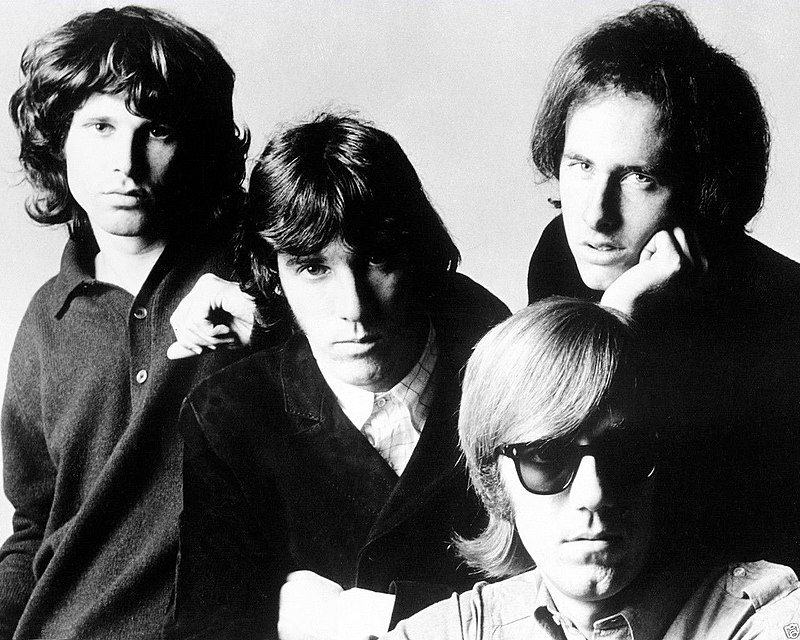
The rock band The Doors. Maybe the best thing about the band was that it took its name ultimately from the wonderful William Blake quoted cited at the beginning of RAW's essay. Public domain photo, source. 

I tend to classify Robert Anton Wilson's work in terms of three main periods: The early years (when he wrote for Paul Krassner's The Realist and other publications, middle period "classic" RAW (including Illuminatus! and Cosmic Trigger, and the later period of books such as TSOG. 

But "Sex Education for the Modern Liberal Adult," tends to suggest that not too much should be made of such classifications, as it is sharply written and just as good as anything written during the "classic period."

And it, and the other pieces selected by Chad, make me wonder how much other really good stuff is out there, as piece by piece, it seems to me that Natural Law Or Don’t Put A Rubber On Your Willy And Other Writings From A Natural Outlaw is as consistent in quality as Email to the Universe, which I regard as an exemplary collection. 

"But to see your own blood draining out ... " I never minded giving blood (which I stopped doing after I was made sick from hepatitis by eating a doughnut, from a shop which had employed someone who was sick and thus managed to spread it to quite a few people), but when I had a nosebleed recently, it was startling to me!

I love the sentences about how millions of "cycles, epicycles, rhythms, and processes" make up our day to day existence, including such things as spring, summer, fall and winter. I confess that moving from Oklahoma to Ohio has reinforced by loathing for cold weather. But there's also something to be said for the sharply drawn four seasons in the northern part of the U.S.

The church's loathing of sex inspired the same sort of strong dislike in me that it inspired in RAW, although in fairness the modern church seems much more sensible than the early church, when loathing of the body was much worse. (There is apparently controversy over whether the early Christian scholar Origen castrated himself.  St. Paul's statement that it is "better to marry than to burn" would seem to suggest that lust is unnatural or sinful.) 

"A Zen master once summed up Buddhism in the one word, 'Attention'." This is another example of how RAW understood Buddhism rather well; this is a good one-sentence summation of mindfulness, which is essentially the practice of Theravada Buddhism.

The remarks about the "oceanic experience" seem to suggest a kind of mysticism that does not conflict with science. Are we "all stumbling into this experience constantly," as RAW asserts, or do only some of us do? For an essay that's only a few pages, this seems like a remarkable manifesto. 

Footnote: I should not that I re-read this chapter on my smartphone, using the Nook ebook I purchased from Barnes and Noble. As I wrote a few days ago, the inexpensive ebook does seem to work now. 


Thursday, December 15, 2022

The Nook ebook for 'Natural Law' has been fixed


If you have held back from participating in the ongoing online reading group for Natural Law Or Don't Put a Rubber On Your Willy And Other Writings From A Natural Outlaw because you could not afford the trade paperback, I have some good news: A good, cheaper ebook version is finally available.

There is still no Kindle version because of weird copyright issues the Robert Anton Wilson Trust is still trying to sort out. (For more on this, see this blog post and Rasa's comment.) But now for about $9 you can buy a Nook ebook from Barnes and Noble, and read it on your cell phone or tablet using the Nook app.

As I wrote earlier, when I bought the Nook book some weeks ago, it would not display correctly on my phone, and I wound up having to ask Barnes and Noble for my money back. (I don't know if the file would have worked on the Nook reading tablet, which I don't own.) Rasa continued to work on the problem and finally got it fixed. I bought it again the other day, and it reads fine on my phone. I'm happy to now own both the paper book and the ebook, and to have a copy of the book I can carry on my phone. 

I hope the release of the corrected Nook ebook will make it possible for everyone to afford a copy of the book. 


Monday, December 12, 2022

Natural Law reading group, Week Three, the title essay


Photo by Samuel PASTEUR-FOSSE on Unsplash

By Chad Nelson
Special guest blogger 

I thought about steel manning the case for natural law, but realize I cannot do a competent job of it. The extent of my homework was to re-read Rothbard’s chapters on the topic in Ethics of Liberty, but it only left me with more questions. I turned to a Clarence Thomas web search hoping to find something more basic. Thomas’s belief in natural law was a point of controversy during his Senate confirmation hearings in 1991, albeit one that took a back seat to the Anita Hill allegations. It’s telling that one can find a litany of academic articles attempting to explain natural law, but very little in the way of a Cliff’s Notes version. Why does it take a law review article to explain something that’s supposed to be so self-evident nobody in their right mind would deny it? Furthermore, why don’t its proponents lead with actual examples of natural law? It ought to be the easiest way to make the case. If these “laws” are so timeless, cross-cultural, and intuitive, surely citing a few of them would give dimwits like us the lightbulb moment we need to recognize it.

After an admittedly weak effort to become a “metaphysical wizard…like Konkin and Rothbard” (p.54), I’m still left thinking that natural law is “ontological spaghetti” (p.45). I’m not clueless about it. I generally understand what its advocates are getting at. It just doesn’t seem possible to ever arrive there. Indeed, natural law seems only able to exist as high-level abstract theorizing. A fun thought exercise, but lacking “real world” applicability, it becomes worthless. Recognizing this, RAW uses his essay to "bring his adversaries down from out of the clouds” as Oz noted in last week’s comments. Or, as RAW puts it, “To come out of our heads…means to come to our senses, literally…” (p.83)

One of the more effective strategies RAW employs is to detribalize, as when he compares and contrasts some of the claims of competing natural law cultists: Mormons, Catholics, Objectivists, feminists, ecologists, Mayans, Aztecs, Nazis, Druids, libertarians, etc. No ideology is spared. These examples are endlessly amusing of course, but if you’re self-aware, they also make you wonder which of your own absurd beliefs might land you on this list. 

If we can barely find agreement among today’s tribes on what is “natural,” how can we ever move backwards in time to evaluate generations past? Can’t we find one such law to put to the test? Says RAW, “about the only rule all tribes agree on is the one that says people who criticize the rules should be burned, toasted, boiled in oil or otherwise discouraged from such heresy.” (p.46) (An interesting aside: heresy “comes from the Greek, heiress, to choose…” (p.62))

The funniest parts of the essay for me come out this smorgasbord of cultural skewering. The whole thing has the feel of a George Carlin special. Indeed if Carlin was “the dean of countercultural comedians,” RAW may well be one of the school’s co-founders. I imagine RAW would have a comedic field day in 2022 given how many more competing natural law cults have arisen.

I found the most interesting line of RAW’s thinking to be his juxtaposition of scientific and natural laws. Natural law advocates are fond of claiming to have discovered the “Science of Justice” (Spooner), so it’s nice to see a philosopher with laboratory experience and scientific know-how confront the claim. Wilson says the claim stems from their misunderstanding of “laws” of the scientific variety, which, if we are being precise, are more appropriately termed approximations, current best guesses, models, etc. Yes, some prevailing scientific laws may be so reliable that we may take them for granted, but as we know, paradigms shift. Besides, scientists, unlike natural law cultists, never resort to burning, toasting, or boiling each other in oil for questioning or seeking to revise what we know. Err...

Perhaps natural laws are like scientific laws in that way though. Not quite universal, but so darn close that questioning them is reserved for only the nuttiest among us. 

RAW: “[N]atural law in [George] Smith's sense would be akin to an absolutely Newtonian scientific prediction and would be equivalent to a kind of practical science, like saying, ‘if you jump off a tall building without a parachute, you will get hurt.’

"One trouble with this unexpected and incongruous intrusion of pragmatism into metaphysics, as I see it, is that it takes the spooky religiosity out of Natural Law, opens the matter to debate and discussion, examination of real details of actual cases, how to gauge probable outcomes, etc., and thus approaches real since, almost. This tendency seems to me a step in the right direction, but it relinquishes the metaphysical Absolute Truth that people like Rothbard and Konkin and other metaphysicians are seeking. That which is placed in a practical sensory-sensual space-time context is no longer absolute, but becomes a matter of pragmatic choice, tactics, strategy and the relativity that obtains in all empirical judgments.” (p.31)

(Another interesting aside: This study of human action, praxeology, is a central component in Rothbard’s and other Austrian economists’ philosophy, and comes from the Latin for the “customary way of doing things — i.e., the tribal game-rules.” (p.18))

After all is said and done, we are left with the conclusion that natural law is just a way for men to “rationalize their own prejudices.” (p.44). A word that appears frequently throughout the essay is “word” itself: “word-and-symbol hypnosis," “webs of words,” “word-play,” “snarl words,” etc. This is obviously no coincidence -- much of this debate over revolves around language, and how we map it to “sensory-sensual experience.” RAW shows that when coupled, “natural” and “law" happen to be two words that “do not correspond to any real territory.” (p.5)

Monday, December 5, 2022

Natural Law online reading group, Week Two, the title essay


 A committee of five presents the first draft of the Declaration of Independence (John Trumbull painting). 

"We hold these truths to be self-evident, that all men are created equal, that they are endowed by their Creator with certain unalienable Rights, that among these are Life, Liberty and the pursuit of Happiness."

So says the Declaration of Independence, which evokes natural law (i.e. in the previous paragraph it mentions "the Laws of Nature and of Nature's God.") Natural law posits that there are "values intrinsic to human nature," as this Wikipedia article explains. These notions are what Robert Anton Wilson is taking on in his essay. 

I wonder if my American readers think it is "natural" to drive on the right side of the road, and my British readers think it is "natural" to drive on the left side? Here is something interesting: "In the UK and Australia, people tend to turn left when entering a building. In the US, they turn right. It’s important to remember if you’re booking a trade show booth." (Source, third item). 

A few annotations: 

Loompanics, Page 3. Boy, did this publisher push the envelope. "According to Gia Cosindas, Amazon.com, eBay, and Google refused to allow Loompanics to advertise on their sites, since some of the books' content violates their editorial guidelines. Specifically, Google wrote, "At this time, Google policy does not permit the advertisement of websites that contain 'the promotion of violence [and] drugs or drug paraphernalia."

New Libertarian, Page 3. The Samuel E. Konkin III magazine. For back issues, including the "Natural Law debate" issue, Vol. IV, No. 13, that Wilson cites, go here.  And I quite liked The Fractal Man, J. Neil Schuman's novel about Konkin.

Samuel Konkin III

"politics remains such a depressing paleolithic and murderous spectacle," page 9. See also Gene Healy on how politics makes everyone dumber. 

For a New Liberty, Page 10. For a New Liberty: The Libertarian Manifesto by Murray Rothbard, an anarcho-capitalist tract, was a big part of the libertarian surge in the 1970s. I had a hardcover copy, when I discovered libertarianism while in college from Illuminatus! and other sources, and it was very influential. I would guess that many serious libertarians have read it; I'd be surprised, for example, if Jesse Walker or Chad Nelson said they had not read it. Rothbard, by the way, was a strong peacenik, like RAW (he was a big influence on the late Justin Raimondo, the founder of Antiwar.com), and that allows many of us to overlook his other sins. (In fact, Raimondo wrote a book about Rothbard.)

"all three at once," Page 17. This business about "the hide of the Easter Bunny" is really funny; did you catch that RAW also is making a joke about the doctrine of the Trinity? 

Simon Newcomb, Page 22 -- Simon Newcomb (1835-1909) was an accomplished mathematician and a very smart guy, but just as RAW mentions, he did argue that airplanes are not possible. (The Wikipedia article, buttressed by footnote 23, says that "When Newcomb heard about the Wrights' flight in 1908, he was quick to accept it," so in Wilson's terms he behaved like a scientist, not as a dogmatist: When he received new evidence he accepted that he was wrong. (I cannot resist repeating the famous saying of Arthur C. Clarke: "When a distinguished but elderly scientist states that something is possible, he is almost certainly right. When he states that something is impossible, he is very probably wrong."

Simon Newcomb

"Doubt everything. Find your own light." Page 23. This seems like a rather free translation. In What the Buddha Taught by Walpola Rahula, the last words are given as, "Transient are conditioned things. Try to accomplish your aim with diligence." The Fake Buddha Quotes website also wonders where this version of the the Buddha's last words came from. 

The Moon is a Harsh Mistress, Page 53. One of Robert Heinlein's most famous novels, published in 1966,  is a favorite of science fiction fans (it won the Best Novel Hugo) but also is a favorite of libertarians (it was the first novel to win the the Prometheus Hall of Fame Award, from the Libertarian Futurist Society, in a tie with Atlas Shrugged (Nineteen Eighty-Four and Fahrenheit 451 had to wait another year). I read it as a teenager and am overdue to read it again; Tyler Cowen re-read it in 2017 and found that despite his low expectations " it nonetheless holds up very well and in fact has aged gracefully."

Arthur Hlavaty, Page 56. The prominent science fiction fan and critic, read  his fanzines! And here are some top quotes, and here is a useful biography. Arthur also founded The Golden APA, which had both Robert Anton Wilson and Robert Shea as members, see my interesting interview with him about it. 


Arthur Hlavaty

"I am writing in defense of personal choice here (if you haven't guessed that already); I merely object to having personal choices proclaimed as new religious revelations which we all must share or be damned," Page 57. RAW's version of libertarianism, and also another comment on what he sees as the irony of debating natural law with libertarians. 

John 8:7, Page 63, the "admirable remark" which Wilson says "ought to be burned into the backside of every moralist, with a branding iron," is (in one translation), " So when they continued asking him, he lifted up himself, and said unto them, He that is without sin among you, let him first cast a stone at her."

psittacine, Page 68, birds of the parrot family.

Next week: More on the Natural Law essay, featuring guest blogger Chad Nelson. 


Monday, November 28, 2022

'Natural Law' online reading group, Week One


Welcome to the online reading group for Natural Law: Or Don’t Put A Rubber On Your Willy And Other Writings From A Natural Outlaw, published by Hilaritas Press. It is written by Robert Anton Wilson; the anthology is edited by Chad Nelson. 

The original long essay, Natural Law: Or Don't Put a Rubber on Your Willy, was published as a short book in 1987 by Loompanics Unlimited.  The Hilaritas Press book Natural Law: Or Don’t Put A Rubber On Your Willy And Other Writings From A Natural Outlaw reprints the original essay but adds 12 additional pieces: nine essays, an interview and a work of short fiction. All 12 additions were selected by Chad Nelson. 

In this reading group, we are covering the Hilaritas Press book. The format is the same as other online reading groups on this website: There will be a blog post, written by me or by a guest blogger, and everyone else is invited to post in the comments. The comments for this blog are moderated, as otherwise Google is apparently happy to let in all sorts of vile spam, but as a rule I approve legitimate comments.

New entries for the online reading group will be posted weekly. Today's entry covers the material in the front of the book, before Robert Anton Wilson's words begin, including John Higgs' piece on Maybe Day and Chad's introduction.

A note on the available texts: As a rule Hilaritas Press books are published as trade paperbacks and as ebooks, but unfortunately in the case of Natural Law, there have been some stubborn glitches. There is still no Kindle, and when I bought an ePub from Barnes and Noble, the text was messed up when I tried to read it with the Nook app on my phone. Barnes and Noble wound up refunding my money; I was able to verify that the text works at the Barnes and Noble website, but I wanted to be able to read it on my smartphone. I cannot say whether the ebook works on an actual Nook ebook reader, or whether the book works on Kobo, etc. Rasa has promised me an update on the ebook situation when he has news, and I'll post any news promptly on this blog. For now, your best option may be the paperback. 

Here are a few annotations:

Cover: The cover is credited to Amoeba, i.e. Scott McPherson, who has done all of the covers for the Hilaritas Press editions of Robert Anton Wilson's work. The cover puns on the Zen koan, "Who is the master who makes the grass green?" mentioned in Wilson's writings, including in this passage in the Natural Law essay:

Every perception is a gamble, in which we see part, not all, (to see all requires omniscience) and “fill in” or project a convincing hologram out of minimal clues. We all intuitively know the obvious and correct answer to the Zen koan, “Who is the Master who makes the grass green?”

But the cover also is an attempt to make the book attractive to the general reader, as opposed to people who are already fans of Wilson; see this blog post for more information. 

After the title page and after the page with the usual publication information, such as the ISBN and copyright notice, there's a photo of Robert Anton Wilson, taken by Duncan Harvey in January 1986 at Chelsea Old Town Hall in London, England, when Wilson was in town for a talk.

The story behind the photo (and the other photos of Wilson taken by Mr. Harvey) is interesting; Mr. Harvey was on assignment for a magazine, but the magazine went out of business and Mr. Harvey was not paid; he was able to sell some of his work to Wilson's British agent.

In 2014, during the Cosmic Trigger play and festival in London, (i.e., the Daisy Campbell adaptation of Wilson's first Cosmic Trigger book, available as a book from Hilaritas,) Harvey handed writer John Higgs a thumb drive with a bunch of photos from that 1986 shoot, digitized from photos the photographer found in his attic; Higgs mentioned the incident in a blog post that included some of the photos, and the photo that John identified as his favorite is the one used in the book. 

John also emailed me at the time to give me access to the photos and suggested I interview Duncan Harvey, and I did, and you can read the interview and see more of the photos. 

A couple of pages later, we come to the "Warning: The Attorney General has determined that this book may be hazardous to your dogma" page, which echoes similar statements at the front of other Robert Anton Wilson books, such as TSOG.

Then we come to the first four lines of a poem by A.E. Housman, "The Laws of God, The Laws of Man," full poem here. (This is also the poem with the lines, "I, a stranger and afraid/In a world I never made.") The poem is appropriate to discussing the purported "natural law" that Wilson takes on in his essay, and the citation shows off Wilson's wide reading. And if you check out the whole poem, it fits well with Wilson's emphasis on intellectual freedom. Housman (1859-1936) was a famous poet and a noted scholar of the classics and professor of Latin. 

Next comes Chad Nelson's "Acknowledgements," which includes Victor Koman, a libertarian science fiction writer and the publisher of KoPubCo.com, which sells books by Koman and by Samuel Edward Konkin III, who put out the publication in which the "Natural Law" essay first appeared. See the website for a list of the issues of "New Libertarian" magazine which include articles by Wilson. The website also offers copies of Koman's Prometheus Award winning novels and a Christmas book for children, The Legend of Anarcho Claus,  that explains Agorism, the libertarian philosophy espoused by Konkin. 

After the Table of Contents, we get John Higgs' piece, "Happy Maybe Day," published in the Guardian newspaper on July 23, 2009. I think John does a masterful job of explaining model agnosticism without lapsing into jargon or cliches -- there's no reference, for example, to "reality tunnels." Notice how John subtly alludes to "the map is not the territory."

And then we get Chad Nelson's introduction, which also discusses model agnosticism and which explains the criteria he used in choosing the pieces for the book that supplement the title essay: "While the additional entries in this volume represent, for me, the best of Wilson's aggravated case of agnosticism and tie in nicely with Natural Law, or Don't Put a Rubber on Your Willy, I realize that they are also simply some of my personal favorites which I am grateful will now see the light of day, thanks to the good folks at Hilaritas Press," he writes. 

Next week will be the first of two blog entries on the Natural Law essay. 


Tuesday, November 22, 2022

New 'Natural Law' reading group starts Monday


A reminder that the reading group starts Monday for the Hilaritas Press edition of Natural Law Or Don’t Put A Rubber On Your Willy And Other Writings From A Natural Outlaw; I'll do the first post. 

If you need more information, see the post last week from book editor Chad Nelson, and there's also my interview with Chad about the book and my interview with Rasa. 

Sunday, November 20, 2022

Brian Doherty on RAW


As we are about to begin (on Nov. 28) a book group on the Hilaritas Press book Natural Law Or Don’t Put A Rubber On Your Willy And Other Writings From A Natural Outlaw, written by Robert Anton Wilson and edited by Chad Nelson, I thought a bit of background on RAW's relationship with libertarianism might be useful. While I maintain that Natural Law is not really a "libertarian book," in the title essay RAW squares off against other prominent libertarians in an essay originally published in a libertarian journal.

Radicals for Capitalism by Brian Doherty, published in 2007, is a history of the libertarian movement, more than 700 pages long, and it includes about four pages of discussion about Robert Anton Wilson.

Doherty says that RAW is "one of the last of the pure Benjamin Tuckerites" and explains that Wilson "love liberty but held fast to Tuckerite ideas that modern corporate capitalism and banking just weren't any kind of liberty he valued." 

Illuminatus! is described as "the most powerful and widely read libertarian artistic statement of the past thirty years," while also noting that "Wilson's work appeals on so many levels that one can become a Wilson Head without reaching his libertarianism. Through Wilson's influence one might become an Aleister Crowleyan, a Wilhelm Reichian, an old-fashioned Tuckerite, a techno-future-optimist in the manner of Buckminster Fuller or Timothy Leary."

Doherty's book also has a brief discussion of Discordianism and Kerry Thornley. Although it is obviously a bit out of date at this point, it is an interesting discussion of the history of libertarianism for those who might be interested. Doherty covers more recent developments in the movement for Reason magazine. 


Wednesday, November 16, 2022

Chad Nelson on the 'Natural Law' book he edited


[As I announced last month, the Natural Law online reading group will begin on Nov. 28. Chad Nelson, who edited the book's contents, has penned the following blog post about the book and the upcoming reading group. -- The Management]

By Chad Nelson
Special guest blogger

I particularly like RAW’s essay collections in book format (Email to the Universe, Coincidence, Chaos and Beyond, etc.; and now, Natural Law). I hope it’s a subgenre of his we can continue to grow given how much worthy material is at our fingertips. 

The new Natural Law collection is unique among them, I think, in that it is probably the collection with the most consistent thematic thread running throughout its essays. More importantly, the questions posed in Natural Law and its accompanying essays are central to RAW’s intellectual legacy: What is reality? And, assuming that’s an unanswerable question (at least not with any certainty or finality), what are we to learn from this mystery? 

Witnessing RAW grapple with these questions over the course of five decades helps us to see how he fine tuned his arguments over time. The changing style throughout Natural Law also serves to bolster its thesis. Its essays are written for different audiences at various points along RAW’s intellectual trajectory, and thus, his presentation throughout the collection morphs. At times, we get essays intended as direct responses to critics, others showcase an idea RAW simply wants to play with. We might encounter a testy RAW, a jokey RAW, or a subversive RAW. In one part, he’s presenting his ideas in dialogue; in another, he's psychically fusing with Nietzsche. The extreme variety from one chapter to the next works on the reader on a subconscious level — a kind of metaphysical cross-training.

I’m of the belief that getting comfortable with questioning reality requires one to keep at it, sort of like a good meditation practice. I still spend 99.9% of my time subsisting on a fixed, objective reality, even long after committing to a steady diet of Maybe Logic. But having a dozen cracks at reality over a sustained, book-length period, definitely gives the reader the best chance of spontaneous return to a place of ambiguity. 

I’m looking forward to reading others’ impressions and takeaways from the book, coming at it from new angles, and considering its relevance to today’s world.