Photo by Samuel PASTEUR-FOSSE on Unsplash
By Chad Nelson
Special guest blogger
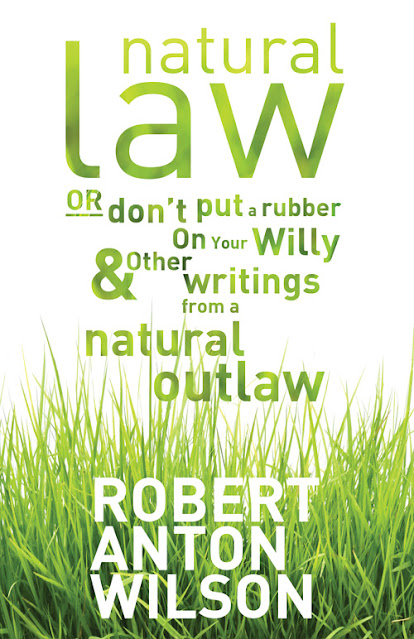
I thought about steel manning the case for natural law, but realize I cannot do a competent job of it. The extent of my homework was to re-read Rothbard’s chapters on the topic in Ethics of Liberty, but it only left me with more questions. I turned to a Clarence Thomas web search hoping to find something more basic. Thomas’s belief in natural law was a point of controversy during his Senate confirmation hearings in 1991, albeit one that took a back seat to the Anita Hill allegations. It’s telling that one can find a litany of academic articles attempting to explain natural law, but very little in the way of a Cliff’s Notes version. Why does it take a law review article to explain something that’s supposed to be so self-evident nobody in their right mind would deny it? Furthermore, why don’t its proponents lead with actual examples of natural law? It ought to be the easiest way to make the case. If these “laws” are so timeless, cross-cultural, and intuitive, surely citing a few of them would give dimwits like us the lightbulb moment we need to recognize it.
After an admittedly weak effort to become a “metaphysical wizard…like Konkin and Rothbard” (p.54), I’m still left thinking that natural law is “ontological spaghetti” (p.45). I’m not clueless about it. I generally understand what its advocates are getting at. It just doesn’t seem possible to ever arrive there. Indeed, natural law seems only able to exist as high-level abstract theorizing. A fun thought exercise, but lacking “real world” applicability, it becomes worthless. Recognizing this, RAW uses his essay to "bring his adversaries down from out of the clouds” as Oz noted in last week’s comments. Or, as RAW puts it, “To come out of our heads…means to come to our senses, literally…” (p.83)
One of the more effective strategies RAW employs is to detribalize, as when he compares and contrasts some of the claims of competing natural law cultists: Mormons, Catholics, Objectivists, feminists, ecologists, Mayans, Aztecs, Nazis, Druids, libertarians, etc. No ideology is spared. These examples are endlessly amusing of course, but if you’re self-aware, they also make you wonder which of your own absurd beliefs might land you on this list.
If we can barely find agreement among today’s tribes on what is “natural,” how can we ever move backwards in time to evaluate generations past? Can’t we find one such law to put to the test? Says RAW, “about the only rule all tribes agree on is the one that says people who criticize the rules should be burned, toasted, boiled in oil or otherwise discouraged from such heresy.” (p.46) (An interesting aside: heresy “comes from the Greek, heiress, to choose…” (p.62))
The funniest parts of the essay for me come out this smorgasbord of cultural skewering. The whole thing has the feel of a George Carlin special. Indeed if Carlin was “the dean of countercultural comedians,” RAW may well be one of the school’s co-founders. I imagine RAW would have a comedic field day in 2022 given how many more competing natural law cults have arisen.
I found the most interesting line of RAW’s thinking to be his juxtaposition of scientific and natural laws. Natural law advocates are fond of claiming to have discovered the “Science of Justice” (Spooner), so it’s nice to see a philosopher with laboratory experience and scientific know-how confront the claim. Wilson says the claim stems from their misunderstanding of “laws” of the scientific variety, which, if we are being precise, are more appropriately termed approximations, current best guesses, models, etc. Yes, some prevailing scientific laws may be so reliable that we may take them for granted, but as we know, paradigms shift. Besides, scientists, unlike natural law cultists, never resort to burning, toasting, or boiling each other in oil for questioning or seeking to revise what we know. Err...
Perhaps natural laws are like scientific laws in that way though. Not quite universal, but so darn close that questioning them is reserved for only the nuttiest among us.
RAW: “[N]atural law in [George] Smith's sense would be akin to an absolutely Newtonian scientific prediction and would be equivalent to a kind of practical science, like saying, ‘if you jump off a tall building without a parachute, you will get hurt.’
"One trouble with this unexpected and incongruous intrusion of pragmatism into metaphysics, as I see it, is that it takes the spooky religiosity out of Natural Law, opens the matter to debate and discussion, examination of real details of actual cases, how to gauge probable outcomes, etc., and thus approaches real since, almost. This tendency seems to me a step in the right direction, but it relinquishes the metaphysical Absolute Truth that people like Rothbard and Konkin and other metaphysicians are seeking. That which is placed in a practical sensory-sensual space-time context is no longer absolute, but becomes a matter of pragmatic choice, tactics, strategy and the relativity that obtains in all empirical judgments.” (p.31)
(Another interesting aside: This study of human action, praxeology, is a central component in Rothbard’s and other Austrian economists’ philosophy, and comes from the Latin for the “customary way of doing things — i.e., the tribal game-rules.” (p.18))
After all is said and done, we are left with the conclusion that natural law is just a way for men to “rationalize their own prejudices.” (p.44). A word that appears frequently throughout the essay is “word” itself: “word-and-symbol hypnosis," “webs of words,” “word-play,” “snarl words,” etc. This is obviously no coincidence -- much of this debate over revolves around language, and how we map it to “sensory-sensual experience.” RAW shows that when coupled, “natural” and “law" happen to be two words that “do not correspond to any real territory.” (p.5)

,_by_John_Trumbull.jpg)