
New musical work, "Prometheus Rising."
Do cannibinoids inhibit the spread of COVID-19? I don't know enough to know what to make of this.
New musical work, "Prometheus Rising."
Do cannibinoids inhibit the spread of COVID-19? I don't know enough to know what to make of this.
After doing some research on who "Tommy Robinson" is, I have unpublished today's blog post on the Psychedelic Future Party.
I support allowing a wide variety of political views on this blog -- I cannot recall censoring a blog comment for political reasons and I've allowed comments from right wingers, left wingers, libertarians and so on -- but I'm really not comfortable with racism or ethnic hatred. I did not detect it in the party manifesto I posted this morning, but I'm just not comfortable with Tommy Robinson's views, or at least some of them, now that I've had a chance to understand who he is. (He's not a household name over here, i.e. in the U.S.)
And just to be clear, I don't like racism whether it comes from the right or the left or anyone else. So whatever one thinks of opinions I express here or anywhere else, I am attempting to be consistent. I apologize if I gave offense.
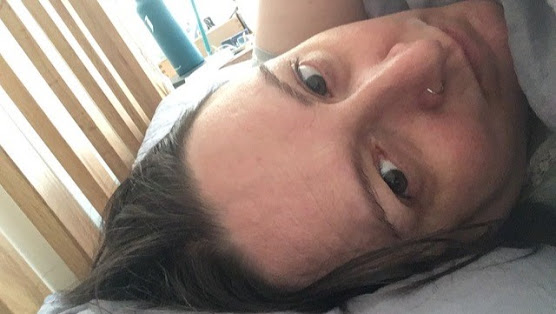
Many of you will know Ian "Cat" Vincent from his prominent role in the RAW fandom community in the UK, and as an author and magician; he's often mentioned in this blog. Cat's wife, Kirsty Hall. is battling cancer, and although the cost of medical treatment is covered by the NHS, there are incidental expenses with getting treatment a considerable distance away from where the couple live. So a GoFundMe has been set up; it very quickly met its goal, but no doubt additional help would be welcome. (The account was created only three days ago -- I'm a bit slow to note this, but I only spotted it yesterday.)
Here is some of the announcement:
"Because this is a rare kind of cancer, treatment will take place in the specialist cancer centre at St James' Hospital in Leeds. This is an hour away from her home in Hebden Bridge, which is a trial for a disabled couple with no personal transport. Fortunately the hospital has a small hotel floor where Kirsty and Cat are able to stay for free during the week. The treatment itself is also free but there are a lot of incidental expenses, mostly weekly travel (a taxi one-way costs around £50, so they will potentially be spending around £600 on that alone) and daily meals (there are no cooking facilities in the accommodation). There have also been a lot of expenses involved in preparing to stay away from home for so long. It's all mounting up, so any help would be very gratefully received.
"Please only give if you can genuinely afford to, Kirsty and Cat know it's been a tough time for many folk and don't want people to put themselves into any financial hardship."
More here. Cat has a Twitter account. And Kirsty does, too.
By Eric Wagner
Special guest blogger
Exercise 5: “James Joyce said he never met a boring human being. Try to explain this. Try to get into the Joycean head space where everybody is a separate reality-island full of mystery and surprise. In other words, learn to observe.”
I have spent a lot of time trying to get into the Joycean head space. I wrote my master’s thesis on the influence of Finnegans Wake on Masks of the Illuminati. When I interned with him, the poet B. H. Fairchild recommended the audiobook of Dubliners where a different Irish actor or writer read each story. I got that audiobook and listened to it over and over again in the car as I finished my master’s degree and at the same time finished writing An Insider’s Guide to Robert Anton Wilson. I also listened to a cassette of Joyce reading from Ulysses and Finnegans Wake which also included other voices reading Joyce’s two books of poetry, and a cassette of Irish songs that included a short version of “Finnegan’s Wake”. I continued listening to this set of Joycean metaprogramming tapes after I got my master’s degree as I continued working on my still unfinished book on Joyce and Wilson. (I plan to finish a rough draft in 2022.) I would mix in some Wilson tapes as well.
During my periods of Joyce obsession I have read Joyce’s books over and over again along with many books about Joyce. I had Finnegans Wake study groups from 1985 to 2021, and I watched a bunch of films about Joyce. I used to have a party on January 6 each year where we would watch the 1987 film The Dead. Joyce’s story “The Dead” takes place at a party for the Feast of the Epiphany around January 6, 1904. I took Bob Wilson to see that film in 1988. My last real period of Joyce obsession came in 2011 as I prepared to give a talk at the 22nd North American James Joyce Conference in 2011 on the question of whether Joyce included references to the Oz books in Finnegans Wake. I finished reading the Wake four times and Ulysses once that year. Of course, I think of Joyce a lot and read a bit of Joyce even when not in one of these obsessive Joyce periods. I did finish rereading Dubliners and two books on Joyce as I did this exercise over Christmas break 2021-2022. I also read a bit in Brenda Maddox’s Nora: A Biography of Nora Joyce. I have tried to read that biography since it came out in the 80's. I still have about 230 pages to go. At one point she refers to some of Joyce's letters to Nora as "even worse than Ulysses". Now, she meant their sexual explicitness, but I kept hearing the voices of many of my professors calling Ulysses the greatest novel ever written, so "even worse than Ulysses" could refer to every novel every written. Perhaps I should have "even worse than Ulysses" printed on the back of all of my books. On page 296 Maddox writes of Harriet Weaver’s generosity towards Joyce, “Miss Weaver’s largesse, some have argued, also impoverished world literature by allowing James Joyce to waste his lyrical gift on the bad joke of Finnegans Wake.” She does not provide any citation with the identity of these “some”. I know that Finnegans Wake frustrates many readers, including many of Joyce’s admirers such as Vladimir Nabokov.
I guess this Joyce obsession has helped me to observe. It seems like looking for quarters [meaning] everywhere, in every person and every situation. Bob Wilson told me he loved Edna O’Brien’s description of Ulysses as a day where nothing, and everything, happens. Certainly, everybody seems “a separate reality-island full of mystery and surprise”. February 2, 2022, marks the centennial of the first publication of Ulysses as well as Joyce’s 120th birthday. Small pockets of our culture will “Try to get into the Joycean head space” this year. Hopefully this will bear some positive fruit for our troubled world.
At the end of every year, Jesse Walker does postings on his blog on the best 10 movies of 10 years ago, 20 years ago, 30 years ago, etc. They are always fun to browse.
For 1931, Jesse listed "Bimbo's Initiation" as the year's best movie, with the comment, "Betty Boop: Final Secret of the Illuminati."
So naturally, I watched it (above, just under six and a half minutes) and I was surprised to see this short film, released about a year before Robert Anton Wilson was born, depict many of the themes in his works about secret societies, initiation and individual initiative. Some of the scenes are reminiscent of incidents in RAWs works, such as the upside down room Sigismundo finds himself in The Widow's Son. And see how the plot matches this RAW quote: 'The ultimate weapon has always existed. Every man, every woman, and every child owns it. It's the ability to say No and take the consequences." And Bimbo undergoes an underground journey, which as RAW wrote in Ishtar Rising is one of the recurring themes of his books.
Check out the cartoon and see what you think! And I wish I knew if RAW ever saw it.

I plan to spend a lot of time this year listening to Bach. I'll listen a lot to some of my other favorites, too, such as Beethoven, Mozart, Prokofiev and Shostakovich. But for them, and for some composers I like, such as the Russian Futurists, I feel relatively up to speed. I've heard all of the Beethoven symphonies, for example, all of the string quartets, all of the piano sonatas. I've missed many of the most important Bach works, and I plan to fix that.
To that end, the updated Gramophone list of the 50 best Bach recordings seems useful, not just for suggestions on specific recordings, but to get a sense of what the major works are, so that you can explore other recordings. (I already have some favorite artists Gramophone's list doesn't seem to mention.) Gramophone has similar lists for Mozart and for Beethoven.
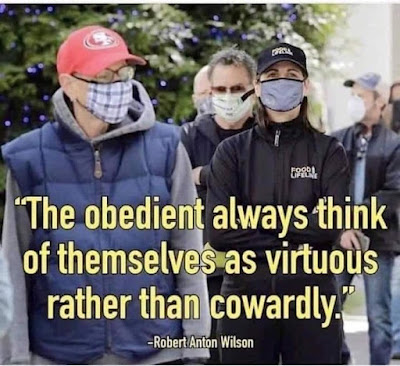
A particular quote from Robert Anton Wilson (from Email to the Universe) has been getting a lot of use on the Internet during the pandemic, and in a new post, RAW Semantics takes on what Brian considers a misuse and misunderstanding of the quote. (I'm not sure if Brian has any particular meme in mind, but I hope the above will serve as a representative example.)
Brian offers a meme of his own:
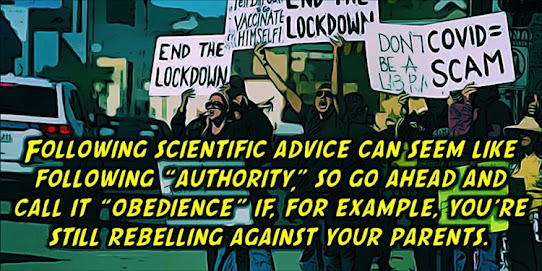
in his post, Brian cites a RAW quote which would seem to favor vaccination as a tool for dealing with potentially deadly diseases.
For more on how RAW apparently felt about vaccinations, see this earlier post.
Note that Brian does not address mandates in general, noting, "Like laws in general, some mandates make sense to me; but others don’t...."
I think I've read that in Britain, masks are not required for children when they are at school.
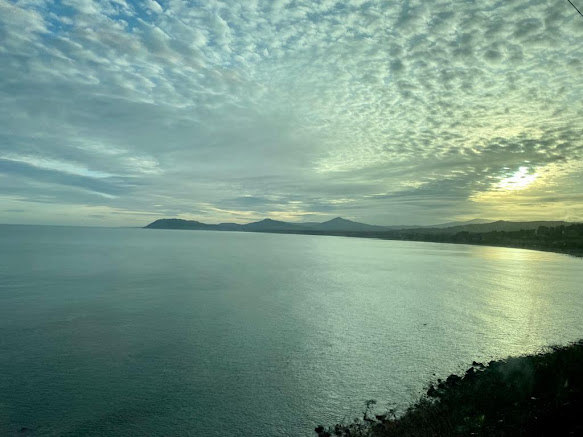
The view from Vico Road
"This past summer, in the midst of a breakup from a long-term relationship and needing to go far away, I embarked on my first ever trip to Ireland. I ended up spending much of the past few months in and around Dublin."
So writes Peter Quadrino, aka PQ, who many RAW fans will recognize as a blogger who has been immersed in the works of James Joyce for many years. You'll want to read his latest blog entry, "So This Is Dyoublong?" Living inside the World of the Wake, Part 1"
"I grew up in New York City where famous sights like the Manhattan skyline, Verrazano Bridge, and Statue of Liberty were familiar aspects of home. An out-of-towner visiting a place like New York City for the first time would instantly recognize many of the landmarks and sights from the background or setting of the worlds of NYC-based films and tv shows. With Joyce's Dublin though, the city is not merely the setting for Finnegans Wake---so much of the book is about the landscape itself, the ecology, the littoral life of the coastal zone, the street grid and its voices, the layers of historical events that shaped the place. Dublin in the Wake becomes the universal city, a city rendered into text with so much mythical depth and detailed density it makes you contemplate all cities."
"On days when I wandered around in what seemed like a James Joyce theme park (a phrase I'm borrowing from former Dublin resident Robert Anton Wilson), casually walking down Westland Row, past Finn's Hotel, down to St. Stephen's Green, past the Shelbourne Hotel, over to King Street past the Gaiety Theater, back towards Grafton Street, up past Trinity College (all places that appear throughout Finnegans Wake) and then along the River Liffey, the river of life, the universal river Joyce anthropomorphized as Anna Livia Plurabelle in the Wake, I'd stop to stare at the varying ripples along the surface of the waters ... "

Terence McKenna
Writer Graham St John is working on a forthcoming book about Terence McKenna, Terence McKenna: The Strange Attractor (MIT Press, 2023). On Twitter, Erik Davis writes that St John is "currently writing what I have no doubt will be the definitive book on Terence McKenna."
Mr. St John also has written an article on "The best books on psychedelics and culture," which lists Davis' excellent High Weirdness: Drugs, Esoterica, and Visionary Experience in the Seventies as one of the best books. Davis says St John's book Mystery School in Hyperspace: A Cultural History of DMT also belongs on the list.
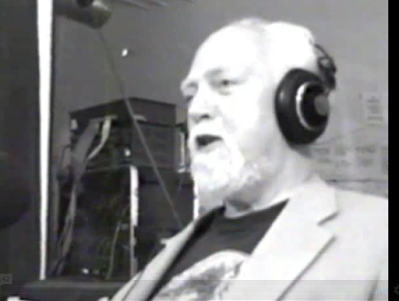
I have long been a fan of Ubuweb, the Internet archive for avant garde films, music, writing and art, although it hasn't much material relating to Robert Anton Wilson. Now, however, the site is hosting a two-hour film of RAW being interviewed by Richard Metzger and Genesis P-Orridge for a show called The Infinity Factory. Lots of trippy special effects. The interview dates from 1997, when RAW came to New York City to deliver the Korzybski lecture at the Harvard Club.
There are other new items on Ubuweb that might be of interest to RAW fans:
Infinity Factory interview with Genesis P-Orridge.
"Surreal news footage of Pound strolling around Paris, narration in French."
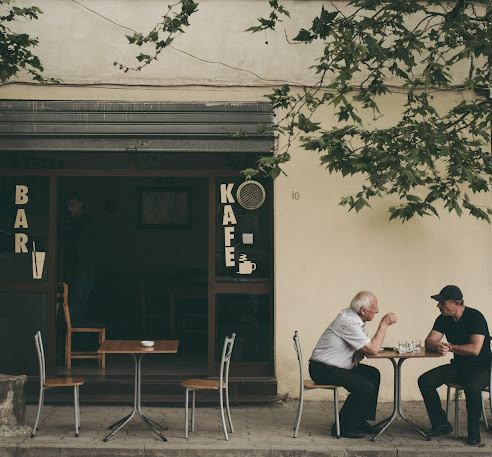
The exercise I find the most interesting in Chapter 10 is this one:
5. James Joyce said he never met a boring human being. Try to explain this. Try to get into the Joycean head space, where everybody is a separate reality-island full of mystery and surprise. In other words, learn to observe.
This seems closely related to the previous exercise:
4. Accept this book, if not in whole at least in general outlines. Assume you have been brainwashed. Try to learn as much from every human you meet about their separate reality-tunnel and see how much of it you can use to make your reality-tunnel bigger and more inclusive. In other words, learn to listen.
I did some searching, trying to find the source of the claim that "James Joyce said he never met a boring human being."
Sylvia Beach, born in America, was a bookseller and publisher in Paris; she was the first publisher of Ulysses and also gave Ernest Hemingway early support. She is apparently the source for the statement:
“As for Joyce, he treated people invariably as his equals, whether they were writers, children, waiters, princesses, or charladies. What anybody had to say interested him; he told me that he had never met a bore.” — Sylvia Beach
For the next week, I am going to try to get into other people's reality tunnels, by listening to them and observing them, with an attempt to learn from them rather than instantly judging their opinions.

As I do every year, I'm going to list the books I finished during the year.
It does lean heavily toward libertarian-themed science fiction, as I am a judge for the Prometheus Award, but I would claim that I read pretty widely. Some of these are re-reads.
Pretty much all of the nonfiction I read in 2021 was at least pretty good. I liked the Znore so well, I bought another copy and gave it to a friend.
I strongly recommend four novels, some old, some new: Situation Normal, Leonard Richardson, a new science fiction novel by an author I really like. I think at least some RAW fans might like it, please see my review. Customs Violation, Janice Weber, literary fiction by another favorite writer, she is always funny and she always writes well about sex and classical music; Citizen of the Galaxy, Robert A. Heinlein, which I somehow missed until now, could this be Heinlein's greatest juvenile? Klara and the Sun, Kazuo Ishiguro, my first by the Nobel-winning writer, but it won't be my last.
A lot of the fiction I had to read for the Prometheus Award was mediocre, although I liked some of it. Most of the nominees really worth reading are covered in the link to my Situation Normal review.
1. Death Sweat of the Cluster: Selected Essays from Groupname for Grapejuice, Znore.
2. Braintrust: Requiem, Marc Stiegler.
3. The Pursuit of the Pankera, Robert A. Heinlein.
4. Situation Normal, Leonard Richardson.
5. Storm Between the Stars, Karl Gallagher.
6. Ready Player Two, Ernest Cline.
7. The War Whisperer: Book Five: The Hook, Barry Longyear.
8. The Age of the Infovore, Tyler Cowen.
9. Cosmic Trigger 2: Down to Earth, Robert Anton Wilson.
10. Who Can Own the Stars?, Mackey Chandler.
11. Heaven's River, Dennis E. Taylor.
12. S.S.O.T.B.M.E. Revised: An Essay on Magic, Ramsey Dukes.
13. The Byzantine World War, N.J. Holmes.
14. Enough Already: Time to End the War on Terrorism, Scott Horton.
15. Streams of Gold, Rivers of Blood: The Rise and Fall of Byzantium, 955 A.D. to the First Crusade, Anthony Kaldellis.
16. Eight Perfect Murders, Peter Swanson.
17. Cosmic Trigger the Play, Daisy Eris Campbell.
18. Customs Violation, Janice Weber.
19. Roger Zelazny (Modern Masters of Science Fiction), F. Brett Cox.
20. Memory Layne, Bob Adamov.
21. Sex, Drugs and Magick, Robert Anton Wilson.
22. Extraterrestrial: The First Sign of Intelligent Life Beyond Earth, Avi Loeb.
23. The Probability Broach, L. Neil Smith.
24. Mozart: The Reign of Love, Jan Swafford.
25. Drug Use for Grown-Ups, Carl Hart.
26. A Desolation Called Peace, Arkady Martine.
27. War Without Mercy: Race and Power in the Pacific War, John Dower.
28. The Little Book of Cannabis: How Marijuana Can Improve Your Life, Amanda Siebert.
29. The Hilaritas Press 'Natural Law' book, mostly never collected "new" material, the manuscript of which I helped proofread. Edited by Chad Nelson. I'll let Hilaritas announce the final title, but it's a great book.
30. Scratch One Flattop: The First Carrier Air Campaign and the Battle of the Coral Sea, Robert Stern.
31. Revolver: How the Beatles Reimagined Rock and Roll, Robert Rodriguez.
32. 2050: Psycho Island, Phil M. Williams.
33. Citizen of the Galaxy, Robert A. Heinlein.
34. Bewilderment, Richard Powers.
35. Epicurus and the Pleasant Life, Haris Dimitriadis.
36. The Book of Dreams, Nina George.
37. Epicurus and His Philosophy, Norman Wentworth DeWitt.
38. Klara and the Sun, Kazuo Ishiguro.
39. A Night in the Lonesome October, Roger Zelazny.
40. The Age of Caesar: Five Roman Lives, Plutarch.
41. Epicureanism: A Very Short Introduction, Catherine Wilson.
42. The Ruins of Ambrai, Melanie Rawn.
43. The Last Assassin: The Hunt for the Killers of Julius Caesar, Peter Stothard.
44. 1942: The Year That Tried Men's Souls, Winston Groom.
45. The Carols of Christmas, Andrew Gant.
46. Open Borders: The Science and Ethics of Immigration, Bryan Caplan.
47. Triple Cross, Marc Stiegler.
