Robert Anton Wilson and Robert Shea. Blog, Internet resources, online reading groups, articles and interviews, Illuminatus! info.

Thursday, December 31, 2020

Five best books of 2020


These are actually not all books published in 2020 -- I have chosen to include some books I read on the Hugo ballot that were published in 2019. But still, there are all pretty new books, and older books I really liked read in the past year are included in the "I also liked" paragraph. 

Piranesi, Susanna Clarke. I was really starting to wonder when we were going to get another novel from the author of Jonathan Strange & Mr. Norrell. Piranesi is very strange, very vivid, rather like a waking dream, about a man who lives in a gigantic, flooded palace, so big it is a world to itself. 

Middlegame, Seanan McGuire. As I wrote earlier this year, the Hugo ballot for best novel was quite good this year, but this riveting fantasy novel, by an author I had never encountered before, was my favorite. 

A Memory Called Empire, Arkady Martine. This is the novel that won the Hugo Award, and it was another one on the ballot I particularly loved. It's a space opera, but a very literary one, and it shows how an empire can "rule" through culture, rather than just power. 

Network Effect, Martha Wells. The first full length novel (the previous ones were novellas). Any science fiction fans who doesn't read these books is making a mistake. They can also be read as future thrillers. 

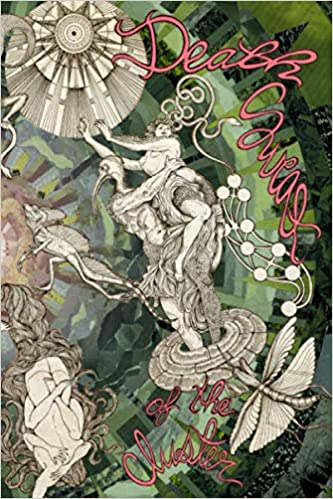
Death Sweat of the Cluster, Znore. Still finishing this, but the essays I've read so far are remarkable. I'd like to see Znore get more attention for his discussion of RAW and conspiracy theories, what to make of Ezra Pound as we go into the new century, etc. 

Other books I really liked: Watership Down, Richard Adams; Plowing the Dark, Richard Powers; The Ten Thousand Doors of January, Alix Harrow, and Moon Rising, Ian McDonald.  

There were three editions of RAW published this year, The Starseed Signals. Ishtar Rising and The New Inquisition. I bought and read all of them and look forward to getting Sex, Drugs and Magick: A Journey Beyond Limits soon from Hilaritas Press. 


Wednesday, December 30, 2020

New Facebook group for studying the Eight Circuit Model

Mike Gathers has created a new Facebook group, Forum for Intelligence Increase, devoted to discussing the Eight Circuit Model of consciousness developed by Timothy Leary and explained (and further developed by Robert Anton Wilson). 

Although it is a new group, it has already attracted a number of people who have written books on the model, including Douglas Wingate, Antero Alli and James Heffernan, and there are also many names you will recognize among RAW fandom. Wingate has posted a PDF of his book, Circuits and Shen: Models of the Evolution of Consciousness and Chinese Medicine. 

If you missed it, here is Mike's own publication. 


Tuesday, December 29, 2020

Many of you would enjoy Znore''s book


While 2020 has been a bad year in many ways, at least we got something to read. Hilaritas Press issued definitive new editions of Ishtar Rising and The New Inquisition and put out a totally new title, The Starseed Signals. 

We also got Death Sweat of the Cluster:Selected Essays from Groupname for Grapejuice, a collection of 27 literary essays by Znore, taken from Znore's Groupname for Grapejuice blog. I had my wife give me a copy of the book for Christmas and also bought a copy to give to a friend. 

Groupname for Grapejuice has a particular focus on James Joyce, but Znore's work discusses Robert Anton Wilson, Philip K. Dick, Ezra Pound and William Blake, among many others. The first essay begins with Znore walking into a used bookstore in 2008 and finding a copy of Cosmic Trigger on the shelf. I'm about 70 pages into the book so far and I've come across many references to RAW.  And the series of essays in the book about Dick's final novels should not be missed by Dick fans

One reason to buy the book as opposed to simply reading the blog (aside from the logical organization Znore gives to his collection) is the introduction, which amounts to a defense of taking literature seriously and also provides a map for what Znore is trying to do. (In a personal literary synchronicity for me, he writes that "in the widest and roughest of terms, the tradition could be called 'Platonic'." Before starting Znore's book, I just finished Richard Powers' Plowing the Dark, which explicitly references Plato's allegory of the cave. Powers' book also is all about the power of literature.)

Death Sweat of the Cluster also is a very good-looking book, with cover and interior art by Kaylee Pickinpaugh. It is only issued in paper; there doesn't seem to be an ebook edition, at least for now. 

My 2017 interview with Znore, which I enjoyed re-reading, offers some background on the book. 

Death Sweat of the Cluster is published by Sync Book Press, the publisher's website is worth a look. 


Sunday, December 27, 2020

Prometheus Rising exercise and discussion group, Week Twelve


By Eric Wagner
Special guest blogger

I have found it sobering to examine my own Thinker and Prover. Despite decades of work on the exercises in Prometheus Rising and in using E-Prime, I still have a lot of negative self-talk. My Thinker tells me negative things about myself, often using the verb “to be,” and my Prover methodically sets about proving them. Hopefully I can alleviate this situation over the next 21 months by doing the exercises in Prometheus Rising.

I notice that stress makes the situation worse. My physical health seems OK, but I allowed myself to get behind in my grading while I felt under the weather. It has proved a challenge to get all my grading done over the past two weeks. Plus, the holidays provide some stress as well. At least my Thinking thinks so, and my Prover complies, perceiving stress and castigating me for getting behind.

My Thinker also thinks Prometheus Rising has a lot to offer, especially if one does the exercises. My Thinker has pointed out my ongoing struggles with self-fulfilling prophecies. At times in the past I have had a Kinbote-like zeal for proselytizing for Dr. Wilson’s ideas and especially for the value of doing the exercises in Prometheus Rising. My Thinker wants these exercises to prove beneficial for me and anyone else who does them, but my Thinker also has lingering doubts about their efficacy. We will see how my Thinker and Prover respond to the experiences of the next 21 months. 


Look what's on the cover


Cover of the first edition

Charles Faris, catching up on his reading just like me, sends me a photo of the book he has checked out of the library. It's a first edition of Understanding Media: The Extensions of Man by Marshall McLuhan, also pictured above.

Charles remarks, " I just borrowed from library to see if I could understand understanding media now that I’m an old fuck and who knew there’s an old school computer print 23 on the cover?

"I’m also noticing how much 8circ is influenced by McLluhan. In some ways it could be helpful to think of 8circ as a media theory especially in terms of media as extension. Of course this begs the question 'extending what?' "

McLuhan also figures in the book I've begun, Death Sweat of the Cluster by Znore. 

Saturday, December 26, 2020

Current reading [Updated]


Tired of "homework" reading such as reading nominees for the Prometheus Award and reading locally written books for my newspaper, I decided to give myself permission to read something I really wanted to read. I'm a big fan of Richard Powers, so I read Plowing the Dark, one of his I had never gotten around to. It's a good novel; I think there's only a couple of his left I haven't gotten to yet.

I mention this because I guess I'm curious about other people's reading habits; one of my tendencies is that when I find an author I really like, I try to read as many books by him or her as I can. Robert Anton Wilson would be an obvious example; for the few I still haven't read, I'm waiting for the definitive Hilaritas Press edition. I've also read everything by Jane Austen I can find, and all of Tom Perotta's books and all of Jack Vance's science fiction titles. I only have 1-2 Iain Banks Culture novels left. Every few years I do another Vladimir Nabokov novel. And so on. 

Plowing the Dark is largely about tech geeks in Seattle working on a virtual reality project; the book makes the argument for the novel as a art form, and as a form of virtual reality, as Powers remarks in this interview: 

At the end it's as if a digital Byzantium has somehow crossed over into the real world.

That is my metaphor for reading; that's what reading does. In the end, the book becomes an apology for the virtuality of fiction, fiction not as a replacement for the real world, but as a hybrid place where the real world is suspended and reconstituted into something more survivable.

Addendum: I forgot to mention that the title Plowing the Dark apparently takes it title from a poem by William Blake. It's believed to be a reference to "Or the plowman in darkness plow?" line 20 of "Earth's Answer."

John Higgs says, "There's a fair amount of plowing in Blake - hence you find Blake-titled novels like Drive You Plow Over The Bones of the Dead by Olga Tokarczuk, who won the Nobel Prize a couple of years ago. Plowing in Blake is often a metaphor for revolution, in the French and American sense - the old order needs to be overturned in order that new life can grow - so he talks a lot about the plow passing over nations."

Thursday, December 24, 2020

New book by Rosemary Leary out soon


Ready for another book about Timothy Leary and his milieu? Psychedelic Refugee, by Rosemary Woodruff Leary and edited by David F. Phillips, will be released on Feb. 9, 2021.

Rosemary Woodruff Leary, Leary's ex-wife, died in 2002, age 66.  So the book actually was assembled by David F. Phillips, who died on March 26, 2020. So this is doubly a posthumous book.


In this intimate memoir, Rosemary describes her LSD experiences and insights, her decades as a fugitive hiding both abroad and underground in America, and her encounters with many leaders of the cultural and psychedelic milieu of the 1960s. Compiled from Rosemary’s own letters and autobiographical writings archived among her papers at the New York Public Library, the memoir details Rosemary’s imprisonment for contempt of court, the Millbrook raid by G. Gordon Liddy, the tours with Timothy before his own arrest and imprisonment, and their time in exile following his sensational escape from a California prison. She describes their surreal and frightening captivity by the Black Panther Party in Algeria and their experiences as fugitives in Switzerland. She recounts her adventures and fears as a fugitive on five continents after her separation from Timothy in 1971.

Would "her papers" in fact be part of the Timothy Leary archive at the New York Public Library? I guess we'll find out soon. The New York Times obituary referenced above says she "lived in hiding for 23 years" after separating from Leary, so the post-Leary chronicle should be interesting, too. She later became friends with Leary again; see the obit for details.


Merry Christmas/Happy winter solstice, and links


 Giotto: Angels at the Nativity, circa 1300


How Claude Shannon invented the future. RAW was a big fan of Shannon. 


I tried to do all happy links. Have a good holiday, everyone!

Wednesday, December 23, 2020

John Higgs (and William Blake) news


In his latest email newsletter, John Higgs reports that VALA, the new journal of the Blake Society, is available to be downloaded free.  I have downloaded my copy and read John's piece, "Blake Under Lockdown."

Much other news in the latest issue. Read it, and if  you haven't already, sign up to get future copies by email. 


Tuesday, December 22, 2020

Brenton Clutterbuck guest post: Discordianism and Deleuze


Kerry Thornley

Gilles Deleuze

Stuck in the Middle with ‘Luze

By Brenton Clutterbuck
Special guest blogger

What is religion? And what is philosophy? We can try to answer these questions in a range of ways. Sometimes we try to map our own intuition onto these questions – we know what religion, and philosophy are deep down, which is to say, we know it when we see it, and we can try to offer explanations that satisfy these intuitions. This is the path of the patient teacher, the methodical map-maker, the precise graphic artist. This approach seeks an exacting certainty, observing the way in which things manifest themselves in our world and detailing them, tracing the lines and curves of their boundaries, tendencies and technicalities. It is definitive, singular, perfected.

Then, there’s the other way to approach things. We leave our tools behind, our rulers and tape measures and sketch-pad and pencils. We dismiss the concrete reality of what we see before us, the absolute certainty of our existing assumptions. Instead, we interpret the question as a challenge? What is religion? What could religion be? What could we do with it? What could it look like? How could it play a role in our lives? This is the world of the maniac teacher, the psychedelically enhanced map-maker, the giddy and gibbering graphic designer who uses a paintbrush in place of a fine-point pen.

Discordianism is a religion born from the creative act of dismissing existing assumptions about religion. It is everything we have been raised to think religion is not. If religion is traditionally solemn, Discordianism introduces playfulness. If religion traditionally promises order, Discordianism offers a holy disorder. When religion is traditionally sacred, Discordia offers profanity. Where religion traditionally requests subservience to a higher power, Discordianism elevates the practitioner to the very authority that religion compels us to serve. At every juncture, Discordianism attempts to reconstruct our very concept of what religion is and can be – it is an anomalous presentation of the very idea of religion, one that disrupts and challenges our existing maps of the world.

Perhaps this is why I felt so excited upon discovering the work of French philosophers Gilles Deleuze and Felix Guattari. Like Discordianism, the philosophy of Deleuze and Guattari is a radical project that seeks nothing less than the absolute reworking of our existing sense of what philosophy is and could be. Philosophy is not, and should not be limited to an expansion of our logical understanding of the world, and our relation to it – rather the philosopher is the creator of concepts, generating new possibilities of thought that allow us to enter into new ways of being.

It is inevitable that there should be some comparison between the two schools of thought – both emerged in a similar period, where the idea of chaos was beginning to take hold, certainties were being eroded, and things long taken for granted had begun to deteriorate. Social upheaval and political instability were leading to all manner of rethinking the world. Disorder worshipping Discordians and post-structuralist philosophers were perhaps two articulations of an inevitable jumbling of social sensibilities.

And yet, I cannot help but feel that the quantum interconnectedness of these two entities is more than the reflection of a similar birthplace. They seem to be two strangers, exploring their own esoteric paths on opposite sides of the world. They stumble sometimes on the same influences - Wilhelm Reich, James Joyce, William S. Burroughs. I imagine that if Burroughs had been inspired to perform his famous ‘cut-up’ technique on Deleuze and Discordianism, he’d have found two entities strangely in sync with each other’s disordered explorations.

For example, chapter 10 of D+G’s A Thousand Plateaus is told through a range of voices including a moviegoer, a theologian, a Spinozist, a sorcerer, and even esoterically from the perspective of a secret and a molecule. Similarly, Robert Anton Wilson’s Cosmic Trigger divides the author into various selves – The Sceptic, the Satirist, the Shaman, the Materialist. Like Wilson, D+G consist of a whole community in only a few bodies; Since each of us was several, there was already quite a crowd, they say in the introduction to ATP. They have used their given names in writing this book, but their intention is ‘to reach, not the point where one no longer says I, but the point where it is no longer of any importance whether one says I. We are no longer ourselves. We have been aided, inspired, multiplied.’ On the Discordian side, Robert Anton Wilson became convinced of the ego as an ‘inconvenient fiction’ after following the advice of Uncle Al and biting his thumb every time he uttered the word ‘I’.

At times, the relationship between Discordia and D+G seems to be as above, one of similarly navigated space. At other times, they seem like complementary technologies. D+G’s conception of the rhizome has already proved enticing to Discordian thought, making its way into the work Art of Memetics, a book that has influenced and taken influence from Discordianism. The rhizome proposes an understanding of an organism as all middle – no beginning or ending. In contrast, the ‘arboristic’ model centralises one particular feature (the great trunk), and draws our conception back to a central point (following each leaf to each branch, each branch to the trunk). To speak arboristically of Discordianism we would elevate one feature – perhaps the Principia Discordia, perhaps the ‘big three’ figures of Kerry Thornley, Greg Hill and Robert Anton Wilson, or the historical emergence of Discordianism in the late 50s, from which it unfolded through time and space. But Discordianism has no leaders – or rather it does, in the shape of every man, woman and child [1], who are all Popes of Discordia. Discordianism functions in practice in fully decentralised form. No key figure, no text, no guiding principle can satisfactorily stand as the trunk from which all Discordian thought emerges. For more than a handful of Discordians, Kerry, Bob and Greg are old news, the Principia is hippie shit, Eris herself is irrelevant. And should we embarrass ourselves by running into the room, our pants around our ankles, screaming, “Stop! Stop! You’re doing it wrong!”? Of course we should not – there is no wrong. There is no point to which everything must connect, only the massive network through which connections emerge.

Ahh. I could go on, but I already feel the mania seizing me, as the rhizome of Disco-Deluezianism travels from one node to another, in a rapid process of free-floating association that D+G might describe as schizophrenic. What else could we say? That the Body Without Organs can correspond to the model of the creative/destructive and order/disorder, or that D+G’s assemblages give us a language to explore the conscious reorganisation of our perception into ordered and disordered arrangements, themselves grouped into reality tunnels which can also splinter and shatter through a self onto which reality is passively synthesised… but… but…

But hold on, let’s draw breath. This is all terribly strange and wonderful, invigorating in its potentialities, thrilling in its uncertainties, forgiving in its strange plasticity. We are in the middle of this process of discovery and intersection – indeed we will always be in the middle.

Shall we say one more thing? D+G tell us that a book is not a container, rather it is connected, engaged, attached to the outside. The creation of a book is in the between-space of itself and all that it meets, and all that rises to meet it. Shall we say the same too of Social Media spaces, of human assemblages? I am in the deep midst of exploring such a space, and I’d love you to join me on this journey, where we can ourselves meet in the middle to be inspired, aided and multiplied.

The Disorganised Body of Eris is a Discord Channel Dedicated to the Intersection of Deleuze and Discordianism. It can be found HERE


[1] I am certain, had Discordia been born a little later, the Pope Card would not have failed to mention the Non-Binary Popes, who are of course equally holy.

Brenton Clutterbuck is a writer and teacher,  the author of Chasing Eris and Si Nos Organzamos. You can follow him on Twitter and find out more here. 


Monday, December 21, 2020

Prometheus Rising exercise and discussion group, Week 11


Well, I am still looking for my second quarter.

The book of course did not anticipate the pandemic, and finding the second quarter has been difficult. Some commenters have pointed out that cashless transactions are more common now than when the book was published, and of course that is true. But there are other reasons I am having trouble. The COVID-19 pandemic is out of control in Ohio, and the governor has responded by suggesting that everyone stop going out as much as possible. This seems like good advice, and going to the store these days is limited to brief stops to pick up something that was ordered in advance. So there is not much for lingering outside the store, looking for coins. I actually do a lot of walking, up to three miles a day if the weather is decent and time permits, and it is my main form of (physical) exercise. 

So, what to do about the exercises? We aren't scheduled to get to Chapter 2 until April, so there is still time. Four of the 11 exercises are tied to the damn quarters, so I will keep trying to find the second quarter through the rest of December. After that, I will consider advancing through the other exercises, particularly as RAW allows us, in exercise No. 5,  to come up with "similar experiments" on our own.

How are you doing on your exercises, and do you think I am giving enough time to finding my two quarters? I did find a first one, and I will give it the college try for another couple of weeks to find the second one. 


Sunday, December 20, 2020

New novel from Steve Pratt


Steve Fly has announced he is releasing a new novel, Deep Scratch. On Twitter, he writes, "Coming this Monday. #DeepScratch - The Novel.

"To receive a digital copy, please support me for the price of a coffee over at Patreon, I’d prefer 3 Euro but 1 is cool, plus you unlock sixty plus unique posts, a bargain bonanza."

More information at Patreon. 

Saturday, December 19, 2020

Music notes

As we have been talking about Paul McCartney lately, I thought I'd note that the new album, McCartney III, has been released. I listened to it Friday on Hoopla, using my best pair of headphones. Seems solid throughout, although no one song really jumped out at me on first listening, the way that "Maybe I'm Amazed" does on the first McCartney album.

Paul McCartney is 78. I am glad he has been able to stay in good health and remain productive; I have been thinking lately about another great musician who was not so lucky. Wolfgang Amadeus Mozart was 35 when he died on Dec. 5, 1791. 

35! Imagine how much more music he would have written if he had lived as long as two other genius composers who died relatively young: Beethoven, who was 56, and Prokofiev, who was 61. 

Or at least imagine what Mozart would have done with just a few more years. 

Here are some of the works he completed in 1791, his last year, and he didn't have a full year: Piano Concerto No. 27, String Quintet No. 6, The Magic Flute, The Clemency of Titus (in other words, he completed two operas), Clarinet Concerto in A, the Requiem in D Minor. This list omits many shorter or less famous pieces.

After I wrote the above paragraph, I wondered what Mozart completed in his last full year. So here is a partial list for 1790: Cosi fan tutte, String Quartet No. 22, String Quartet No. 23,  String Quintet No. 5. In 1788, Mozart completed the famous last three symphonies, 39, 40 and 41, and 1788 also included Piano Sonata Number 15, Piano Concerto No. 26, Piano Trio No. 4, Piano Sonata No. 16, Violin Sonata No. 36, Piano Trio No. 5, Divertimento in E-flat and Piano Trio No. 6. My favorite piano concerto, No. 21, was written in 1985, and without belaboring the point, he didn't exactly take the rest of the year off. 

Mozart was one of Robert Anton Wilson's favorite composers; in Right Where You Are Sitting Now, RAW writes "I believe in Bach, the creator of heaven and earth, and in Mozart, his only begotten son, and in Beethoven, the mediator and comforter;" (in "Credo;" he also mentions Vivaldi, Ravel, Stravinsky and "many another.") 

I have just discovered there is a major new Mozart biography out, Mozart: The Reign of Love by Jan Swafford. Tyler Cowen's review.  Eric Wagner and I both read Swafford's Beethoven biography, and the book highlighted the connection between Beethoven and the Illuminati, please see my review. 

My Russian Futurism music blog recently launched; at some point, I'll do a post at this blog explaining my rationale for it.