Robert Anton Wilson and Robert Shea. Blog, Internet resources, online reading groups, articles and interviews, Illuminatus! info.

Friday, December 30, 2022

'The Periodic Table of Energy,' a lost RAW-Leary book


The Periodic Table of Energy
is an unpublished book that apparently was a collaboration between Timothy Leary and Robert Anton Wilson. 

Prop Anon, who has been posting many RAW-related documents since completing his biography of Robert Anton Wilson, which is being brought out by Strange Attractor, has published an article on his Chapel Perilous website, "The Periodic Table of Energy--RAW's 1st article about 8 Circuits!"

Prop describes the piece as RAW's first piece on the Eight Circuit model, and the intro for the piece in the Berkeley Barb makes it clear that it's a collaboration between the two friends, Wilson and Leary. 

The editor's note/intro to the 1975 piece from the Berkeley Barb, written by someone named Steve Long, says:

Wilson is currently writing The Starseed Signals, a book based on Leary’s scientific development from 1957 to the present: “I’m hoping to demonstrate that, as usual, the man most persecuted by society is its greatest genius,” he said.

Bob Wilson summarized The Periodic Table of Energy as follows: “The basic idea is that the human nervous system can evolve through 24 stages, turning on to new signals at each stage, tuning in to new gestalts, and therefore literally developing new circuits or new ‘brains.’ And the nervous system has been preprogrammed to through this evolution.” 

Elsewhere, The Periodic Table of Energy excerpted in the Barb has been treated as an unpublished Leary book. Here is my 2012 post about the manuscript being auctioned off.  Here is the Boing Boing piece, by Mark Fraunfelder, about the auction. You can read the press release about the auction, 

I don't know who bought it, what happened to the manuscript, or if anyone is going to bring it out; I will make inquiries. Maybe Prop knows something? 


Thursday, December 29, 2022

I enjoyed the Claude Shannon biography


I don't know how history is taught here in Japan, but in the United States in my college days, most of the time was spent on the study of political leaders and wars -- Caesars, Napoleons and Hitlers. I think this is totally wrong. The important people and events of history are the thinkers and innovators, the Darwins, Newtons and Beethovens whose work continues to grow in influence in a positive fashion.

-- Claude Shannon, quoted in A Mind At Play

Spurred by listening to the recent Hilaritas Press podcast on Claude Shannon, the American mathematician mentioned in RAW's works, I spent the week reading A Mind At Play, the biography written by the two co-authors Mike interviewed in the podcast, Jimmy Soni and Rob Goodman.

Shannon essentially invented information theory and led the way for the digital age with his seminal 1948 paper, "A Mathematical Theory of Communication." Among other points, Shannon showed how all messages could be transmitted using the binary digits or "bits" used by computers, showed how noise could be eliminated from messages (it was previously assumed, the authors say, that noise in messages was just something you had to put up with), showed how files of information can be compressed and provided other insights. The authors also cover Shannon's other work, including many devices that showed how Shannon's mind worked and how he liked to amuse himself. (He invented a wearable computer to use in casinos while trying to win at roulette, an early chess playing computer and a flame throwing trumpet. One of Shannon's devices that amused me had a switch that was flipped to be turned on. When you flipped the switch, a hand would emerge and turn the switch off!)

I did my best to follow the authors' technical explanations. Next I plan to read another book dealing with information, James Gleick's The Information: A History, a Theory, a Flood, which apparently also has quite a bit about Shannon. 

I can't help but notice how different Shannon was from another subject of a Hilaritas podcast, Buckminster Fuller. As Alec Nevala-Lee's biography shows,  Fuller did have many interesting ideas, but he fibbed constantly about his biography and achievements, took credit for other people's ideas, exaggerated his successes and constantly sought fame and acclamation. A Hilaritas podcast with Kurt Przybilla covers some of Fuller's ideas and also transmits some of Fuller's self-serving BS, although to Przybilla's credit, he corrected podcast host Mike Gathers when Mike suggested that Fuller might be the kind of person who didn't worry about credit. (The podcast came out before the Nevala-Lee book, so neither the host nor the interviewee had access to Nevala-Lee's revelations). 

Shannon simply pursued his own interests. He avoided publicity when he could and tried to avoid being turned into a guru. 

After Shannon became famous, he wrote a piece called "The Bandwagon" in which he tried to discourage others from turning Shannon's information theories into all-purpose explanations for unrelated fields. And when Fortune magazine ran a piece on Shannon, with two opening paragraphs hailing Shannon's genius, Shannon protested that "communication theory is not in the same league with relatively and quantum mechanics."

It's also telling, I think, that Fuller apparently made up a story about Albert Einstein appreciating Fuller's genius while Shannon downplayed his interactions with Einstein, merely saying they sometimes waved to each other. Shannon worked for awhile at the Institute for Advanced Study at Princeton, where Einstein was the most famous scholar. According to one story, one time when Shannon was lecturing, Einstein wandered into the classroom, listened for awhile, whispered into the ear of a man at the back, and then left. When he finished his class, Shannon rushed to the back of the room to find out what the great man had said. Einstein had asked where to find the bathroom!


Wednesday, December 28, 2022

The Hilaritas podcast with Oz Fritz


Listening to the Oz Fritz episode of the Hilaritas Press podcast made me want to re-read Masks of the Illumnati and the Schroedinger's Cat trilogy once again, as Oz apparently has recently done. There's discussion of Kabbalah, an interestingly topical oddity in the Cat books, a book recommendation, and talk about Oz' interest in Bob Dylan, among other topics. Not too much about Oz' work as a recording engineer and producer, but I had the feeling listening to the podcast that Oz could talk for hours about different topics. I do wish there had been a bit more discussion about Oz' interest in music. 

You can read Oz' blog, The Oz Mix. And here's an Oz piece on Dylan that fits in with the discussion on the podcast. Other related links at the first link in this post. 

Next month's episode is anarchist writer Wayne Price discussing Peter Kropotkin. 

Tuesday, December 27, 2022

My Christmas haul

 I often get books for Christmas (because I ask for them.) This Christmas, I got three titles by asking my wife and my son to give them to me. What fascinates me is that all three of the books are connected to this blog. 


John Higgs' book on the Beatles and James Bond has not yet been published in the U.S., so my wife ordered it from the Book Depository, which ships books worldwide from Britain. I am eager to read it. It turns out to be a pretty hefty book, about 500 pages. 

The back cover has endorsement quotes from Salena Godden,  Jeremy Deller and Stuart Maconie. I kind of know who Salena Godden is because she has been associated with John Higgs and the British Discordian crowd. I have no idea who Jeremy Deller or Stuart Maconie are. Presumably when a literate British person hears that Jeremy Deller or Stuart Maconie have endorsed a book, he or she will possibly feel an irresistible lust to read it. I wonder who will be quoted in next year's American edition?


I put up a blog post announcing Kumano Kodo: Pilgrimage to Powerspots by J. Christian Greer and Michelle K. Oing earlier this year, and now that I have it, I can finally read it. It is about "Japan's oldest pilgrimage route," and it includes many collages in color. It seems like an unusual book. More information about the book at the link. 

Speaking of Christian Greer, here is an announcement on Twitter from Berkeley Alembic: "We're extremely excited to announce a new 5-part seminar with @erik_davis and J. Christian Greer: 'Expanded Minds: Spiritual Wisdom from the Psychedelic Underground'." More information here. One more bit about Christian: "His forthcoming book, Angelheaded Hipsters (Oxford University Press), explores the expansion of psychedelic culture in the late Cold War era." 


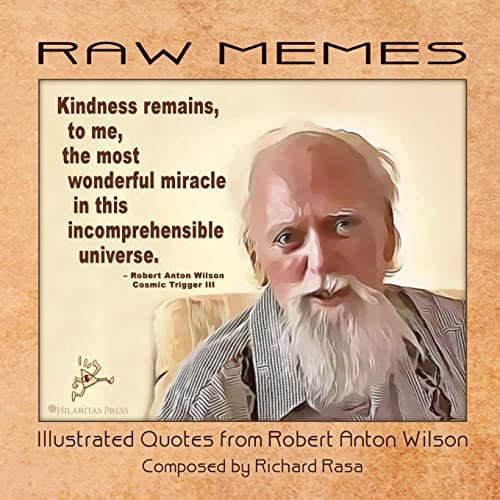
Finally, I have a new copy of RAW Memes by Richard Rasa, which collects together many of the memes Rasa has produced. On the pages facing the memes are additional extracts of RAW prose. Apparently the reader is supposed to figure out the patterns Rasa used in assembling the book, so this should be a test of my RAW scholarship. 

Also, fortunately, by its nature this is a book that can be read in bits, and I have other distractions now. For one thing, I am trying to finish a biography of Claude Shannon, A Mind At Play, that I got interested in after listening to the Hilaritas Press podcast featuring the two authors, Jimmy Soni and Rob Goodman.

My main Christmas gift some years ago was a big hardcover, the Oxford Classical Dictionary. It had little connection to this blog. It was an expensive hardcover, and soon after I got it, they put out a new edition! 

Monday, December 26, 2022

Natural Law reading group, week five: 'Notes of a Skeptical Mystic'

Unsplash photo by Benjamin Child

The latest piece we are all reading as part of are ongoing reading group reads both like an essay which is deeply engaged with Buddhism, and one that takes on the "Buddhism industry," at least as it's practiced in the West.

I've taken instruction in mindfulness meditation, and there's a lot of emphasis on technique: How to sit, ow to focus upon the breath, how to perform the walking meditations. (Mindfulness meditation basically comes out of the Theravada Buddhist tradition in south Asia; RAW seems more familiar with the Zen Buddhism that is prevalent in more northern areas of Asia, such as China and Japan). RAW's essay seems to offer a critique of such instruction:

There is probably nothing funnier than the attempts of an Occidental adult to learn contemplation. He generally sits tensely (in the full lotus position, of course), screws up his face as if he were doing a problem in triple integral calculus, and slowly turns purple.

If you ask him what he is doing, he says he is trying to "force" his "mind" to stop thinking.  A dog has more sense. He simply sits down, or more often lies down, and contemplates. He often does not think he's doing anything special, and he is not trying to become a Buddha. He simply contemplates.

This is pretty amusing and also maybe a little unfair; in mindfulness instruction, the instructors usually tell their students not to worry about whether they are sitting in the correct position, and they usually students to relax and not to judge themselves over whether they are "doing it right;" when your mind wanders, you are supposed to calmly focus upon your breath. 

But perhaps RAW has a point; it's easy to get caught up on the awareness of breath technique. Perhaps the instructors should emphasize alertness and paying attention, and then simply say that watching your breath in one possible technique. RAW argues here that focusing on the techniques of meditation practice means that you wind up focusing on the "road map" rather than the journey.

I've had trouble maintaining a meditation practice. I know that other people say they get great results; I eventually get bored and feel like I'm not getting enough out of it. 

The discussion that "In the highest contemplation, there is no consciousness of 'I'" toward the end of the essay sounds like a reformulation of the Buddhist doctrine of no-self. 

I guess I am curious what other folks who have tried studying how to meditate will think of this essay. 

This is another early piece, published in The Realist back in 1959. Next week, we take on "Don't Be Afraid of Black Magick," which was published in 1977. 


Saturday, December 24, 2022

Nick Herbert in the 'New Yorker'


A recent photo of Nick Herbert, posted at his blog

The New Yorker runs a piece on "The World-Changing Race to Develop the Quantum Computer," by Stephen Witt, and my favorite "hippie physicist," Nick Herbert, pops up in the narrative:

"But Clauser had also demonstrated that entangled particles were more than just a thought experiment. They were real, and they were even stranger than Einstein had thought. Their weirdness attracted the attention of the physicist Nick Herbert, a Stanford Ph.D. and LSD enthusiast whose research interests included mental telepathy and communication with the afterlife. Clauser showed Herbert his experiment, and Herbert proposed a machine that would use entanglement to communicate faster than the speed of light, enabling the user to send messages backward through time. Herbert’s blueprint for a time machine was ultimately deemed unfeasible, but it forced physicists to start taking entanglement seriously. 'Herbert’s erroneous paper was a spark that generated immense progress,' the physicist Asher Peres recalled, in 2003."

See this blog post, if "Clauser" does not ring a bell. Here is Nick's blog. 

Hat tip, Joseph Matheny. I guess I should make the RAW connection explicit: Nick Herbert is mentioned in the first Cosmic Trigger book. 

Friday, December 23, 2022

New Hilaritas podcast features Oz Fritz


The latest Hilaritas Press podcast, released today, features recording engineer and producer Oz Fritz discussing magick and RAW, including discussion of how Aleister Crowley and James Joyce influenced Robert Anton Wilson's work. As usual, the official podcast site includes useful links. Available on Apple, Podbean, Google, Spotify and Tunein, and also likely at other podcasting apps/sites. 

Thursday, December 22, 2022

Does the snafu principle explain Elon Musk?


Robert Anton Wilson as a Pokemon, posted on Mastodon by @putmyspellonyou@nerdculture.de

Elon Musk's tenure as Twitter boss has been notably rocky, disappointing his supporters and making his foes gleeful. A thread I spotted on Twitter from Anosognosiogenesis@pookleblinkyappears to apply the Snafu principle to Musk:

"Robert Anton Wilson's SNAFU principle: communication is only possible between equals. The powerful are surrounded by yes-men who filter all information to them to minimize their discomfort. 

"This is one reason billionaires don't understand *anything* about anything."

Here is all of the thread. 

Speaking of Musk, sort of, I have been experimenting with using Mastodon, which has become the alternative social network of the moment. If you care to follow me, I'm @jacksontom@liberdon.com

Mastodon intrigues me because it is decentralized, operated from a bunch of different servers, so in theory one person or one corporation can't take it over and impose his/her/their will on everyone. (You don't log on to "Mastodon," you log in to your particular server hosting your account.) But at least so far, I don't see it as a viable alternative to Twitter.

I tend to use Twitter as a kind of headline service and to follow people who I think are particularly interesting. 

As far as I can tell, most of the Mastodon users are left wingers who are mad at Elon Musk. So if you want to read endless denunciations of Musk or Donald Trump or read a lot about trans issues, it's a good site. 

But Mastodon has little on many topics I'm interested in. For now, I'm going to have to continue to use Twitter to follow what's going on in the world of Robert Anton Wilson fandom. There are a few RAW postings, but not a lot. I also can't use Mastodon to follow news about my favorite sports team, the Cleveland Guardians. I searched and searched, and all I could find were a couple of general baseball feeds.

And many of my favorite Twitter folks haven't migrated to Mastodon yet. Prop Anon is on Mastodon, and so is John Higgs, but many other folks aren't there, or have set up Mastodon accounts without actually being active.

Perhaps as Mastodon grows, it will become more comprehensive in its topics and more useful. And I did manage to find a libertarian server (or "instance"), liberdon.com, to host my account. 

Here are a couple of Mastodon guides: From Nikodemus, and one from joyeusenoelle. 


Wednesday, December 21, 2022

John Higgs on lucid dreaming and AI art

Dave Green

John Higgs takes on AI art in his latest newsletter, arguing that most of it is not very interesting, and then writes about an artist named Dave Green who uses lucid dreaming to make interesting images using AI. John does not mention surrealism, although I wonder if this is part of the inspiration here.

John also points to a recent interview where he mentions he is "working on four books at the moment," but doesn't offer any clues on what they are about. More information to come, I'm sure.


Tuesday, December 20, 2022

Cats, home for the holidays!


The above cat, Munchkin, recently relocated from East Timor to Virginia, on the East Coast of the U.S. He's been reunited with my friend Rob Pugh, a RAW fan, and Rob's wife. Apparently, twice a year, it is possible to transport a cat from East Timor to the U.S., so long as you are willing to pass through Portugal. 

Rob's wife works for the State Department and was earlier this year stationed at the U.S. Embassy in East Timor. She was transferred back to Washington, D.C. She and Rob thought it would be easy to take their cat along, but it didn't work out that way, Rob reports:

"When we got to the airport in June, despite the many assurances from the airline, they refused to let our cat board with us... long story short, after months of logistical, bureaucratic and other obstacles, we just got back last night from a week and a half of 30+ hour flight times, from returning to Timor and hand carrying her out through Singapore, Dubai, Portugal... "

When I asked for more details about what happened to the cat when the couple tried to board with it back in East Timor, Rob added: 

"After a few frustrating hours at the airport, the Mrs and I called it and decided we weren't getting on the plane, returned to our empty government housing and spent 3 weeks, to no avail, trying to figure out an exfil/extraction from Timor to the USA. Due to the requirements/vagaries of government regulations, after three weeks we had to call it and leave our cat  there while we tried to figure out a way to get her out of the country. Very luckily we had in the couple months prior frequented the only animal boarding, supply, feed store in *the entire country* and were able to board her there while we had to come back to the states. There are, literally, no - zero - none pet relocation services companies in the country (see again, developing country/third world) and we spent the last four months contacting multiple companies in Indonesia, Australia, Singapore, the USA to try and find some way to get her to the US. To no avail. There are limited flights out of Timor, and the countries they go through - Indonesia, Malaysia, Australia - all are heavily restricted wrt animals. But twice a year there are flights run through Portugal (former Portuguese colony) that served as our Plan B. After 4.5 months, Plan B was now Plan A, and once navigating more bureaucratic State Dept nonsense, we went back this month to hand carry her out. It was, tbh, just a nightmare. But it all worked out, and now our 'family' is reunited."


It seems to me Munchkin ought to be willing to hold still and pose for a photo after his owners went to all that trouble. 

I can't top Rob's story, but by happenstance I was involved in a much more modest cat transportation effort over the weekend.

A volunteer transportation outfit called Imagine Home needed to move a newly-adopted cat from Michigan to New York, so a relay of volunteers moved the cat from point to point. My wife and I took possession of the cat in Elyria (west of Cleveland) and transported it to Mentor (east of Cleveland). 


My wife and I took possession of a cat named Smoke from these folks. 


Smoke sitting in the back seat of my wife's car. 


My wife and I in Elyria, Ohio, after we've taken possession of Smoke. 


Monday, December 19, 2022

Natural Law reading group, Week Four, 'Sex Education for the Modern Liberal Adult'


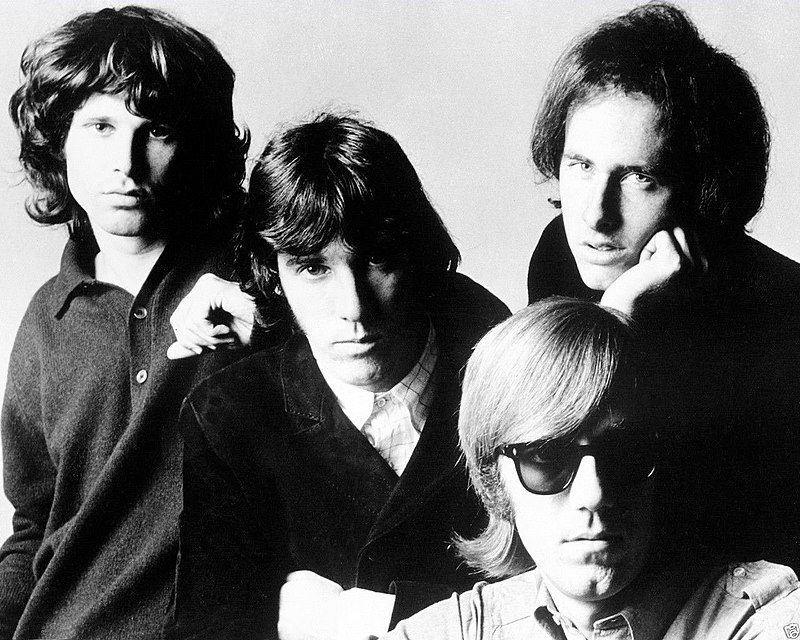
The rock band The Doors. Maybe the best thing about the band was that it took its name ultimately from the wonderful William Blake quoted cited at the beginning of RAW's essay. Public domain photo, source. 

I tend to classify Robert Anton Wilson's work in terms of three main periods: The early years (when he wrote for Paul Krassner's The Realist and other publications, middle period "classic" RAW (including Illuminatus! and Cosmic Trigger, and the later period of books such as TSOG

But "Sex Education for the Modern Liberal Adult," tends to suggest that not too much should be made of such classifications, as it is sharply written and just as good as anything written during the "classic period."

And it, and the other pieces selected by Chad, make me wonder how much other really good stuff is out there, as piece by piece, it seems to me that Natural Law Or Don’t Put A Rubber On Your Willy And Other Writings From A Natural Outlaw is as consistent in quality as Email to the Universe, which I regard as an exemplary collection. 

"But to see your own blood draining out ... " I never minded giving blood (which I stopped doing after I was made sick from hepatitis by eating a doughnut, from a shop which had employed someone who was sick and thus managed to spread it to quite a few people), but when I had a nosebleed recently, it was startling to me!

I love the sentences about how millions of "cycles, epicycles, rhythms, and processes" make up our day to day existence, including such things as spring, summer, fall and winter. I confess that moving from Oklahoma to Ohio has reinforced by loathing for cold weather. But there's also something to be said for the sharply drawn four seasons in the northern part of the U.S.

The church's loathing of sex inspired the same sort of strong dislike in me that it inspired in RAW, although in fairness the modern church seems much more sensible than the early church, when loathing of the body was much worse. (There is apparently controversy over whether the early Christian scholar Origen castrated himself.  St. Paul's statement that it is "better to marry than to burn" would seem to suggest that lust is unnatural or sinful.) 

"A Zen master once summed up Buddhism in the one word, 'Attention'." This is another example of how RAW understood Buddhism rather well; this is a good one-sentence summation of mindfulness, which is essentially the practice of Theravada Buddhism.

The remarks about the "oceanic experience" seem to suggest a kind of mysticism that does not conflict with science. Are we "all stumbling into this experience constantly," as RAW asserts, or do only some of us do? For an essay that's only a few pages, this seems like a remarkable manifesto. 

Footnote: I should not that I re-read this chapter on my smartphone, using the Nook ebook I purchased from Barnes and Noble. As I wrote a few days ago, the inexpensive ebook does seem to work now.